

Specialty Rolls · Compression & Finishing

Calendering Rollers

 Heated & non-heated designs · Controlled deflection · OEM and custom line builds 

Calender Rolls & Calendering Rollers

 PRS calender rolls deliver precision pressure and thermal control for web compression, smoothing, and surface finishing across film, nonwovens, battery electrode manufacturing, paper, and specialty converting markets. Single-shell, double-shell, and heated configurations available with controlled deflection options. Custom-engineered to OEM and process line specifications, with surface finishes from mirror-polished to specialty textured. Serving converters across the globe. 

 · Heated & non-heated designs · Controlled deflection · OEM and custom line builds 

calender roller new . v22222

Custom

Engineered to Your Line

Thermal Options

Heated or Chilled

Controlled

Deflection Available

Surface Finishes

Mirror to Textured

How Calender Rolls Work 

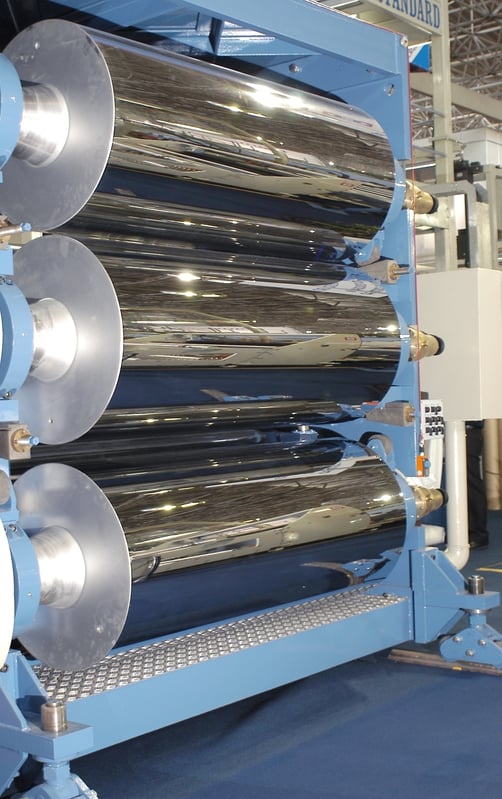
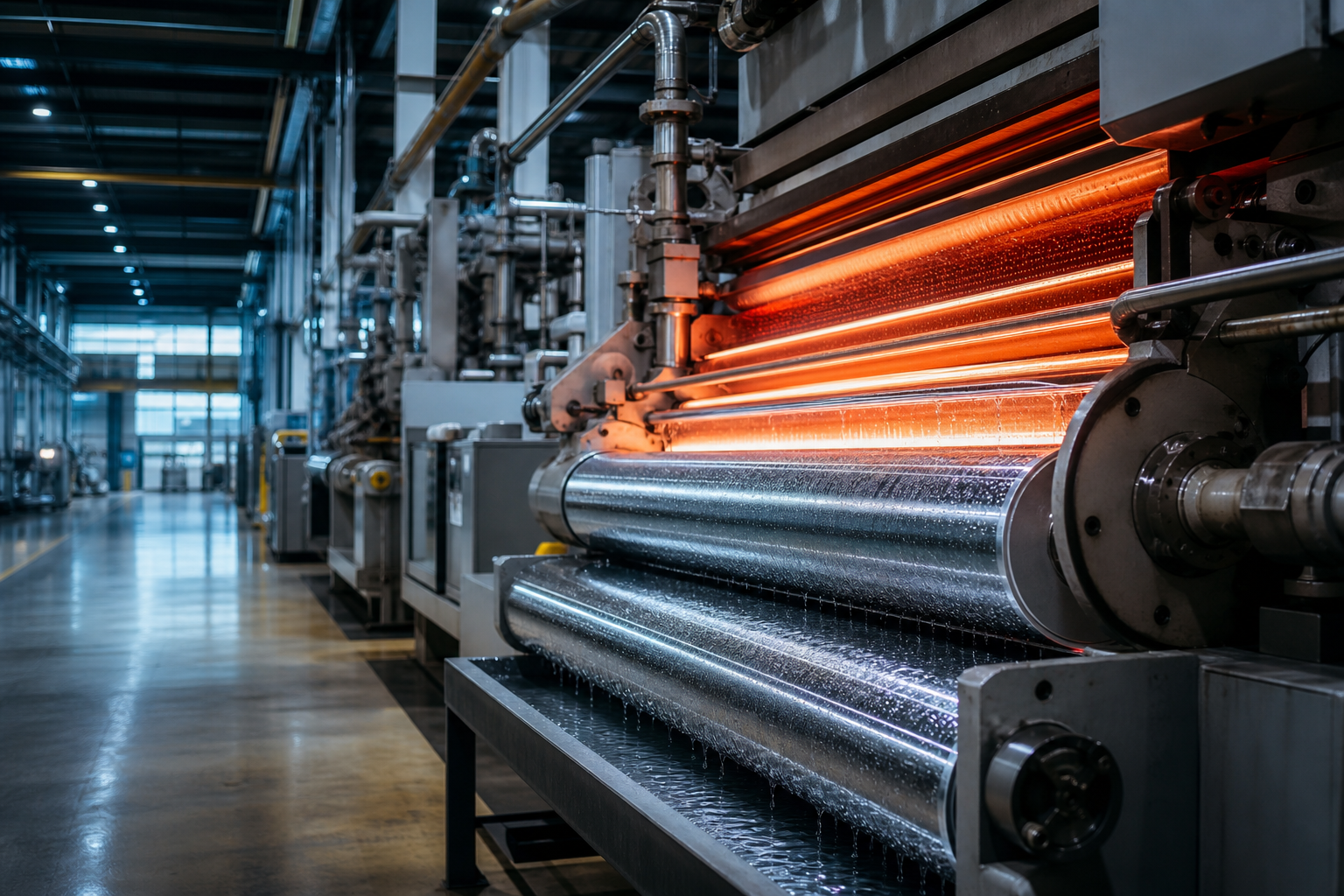
A calender roll — also called a calendering roller — is a precision-engineered cylindrical roller used in a calendering nip to apply controlled pressure, and often controlled temperature, to a moving web. Calendering operations pass the web between two or more rolls under high nip pressure, compressing the substrate to achieve a specific outcome — densification, surface smoothing, thickness reduction, lamination, surface finishing, or thermal bonding. The calendering nip can be configured as two rolls, three rolls, or as a multi-roll stack, depending on the process requirements and the substrate being processed.

The performance of a calender roll is governed by three primary engineering variables. The first is dimensional precision — face length, diameter, runout, and concentricity all directly affect how uniformly pressure is distributed across the web width. Even small deviations in roll geometry translate into measurable variation in calendering outcome across the substrate. The second variable is deflection control. Under load, every calender roll bends slightly along its length, which causes the nip pressure to be lower at the center of the web than at the edges. For wide webs and high-pressure applications, this deflection-induced pressure variation is unacceptable, and PRS offers controlled-deflection designs that compensate through crowning, controlled-deflection internal hardware, or paired roll geometry. The third variable is thermal performance — for heated calender applications, the internal flow path design that delivers uniform surface temperature is just as critical as the dimensional accuracy of the roll itself.

PRS calender rolls are manufactured to tight runout tolerances, surface specifications, and thermal transfer performance for each application. Whether the roll is processing freshly extruded polymer film, bonding nonwoven fibers at controlled temperature, compressing battery electrode material to precise density and thickness, or finishing paper to a specified gloss level, the engineering principles are the same — and the difference between a roll that delivers consistent product and one that creates production problems is determined almost entirely by design choices made before manufacturing begins.

PRS CALENDER ROLL ENGINEERING TEAM

 PRS engineers collaborate directly with customers to ensure the right roller design, material selection, surface finish, and thermal configuration to achieve consistent production outcomes. Calender roll design — particularly the integration of dimensional precision, deflection control, and thermal performance — is a specialized engineering discipline where the right combination of variables produces production quality, and the wrong combination produces persistent variation. Our experience spans film extrusion, nonwovens, battery electrode manufacturing, paper finishing, and OEM equipment integration. 

cALENDER rOLL APPLICATIONS

 PRS calender rolls are used across the full range of web compression, finishing, and bonding markets. Each application has specific requirements for pressure, temperature, surface finish, and deflection control — our engineering team works with you to match the roll specification to your line, substrate, and process outcomes.  

Heat Treatment Extrusion Process
Film & Sheet Extrusion

Film & Sheet Extrusion

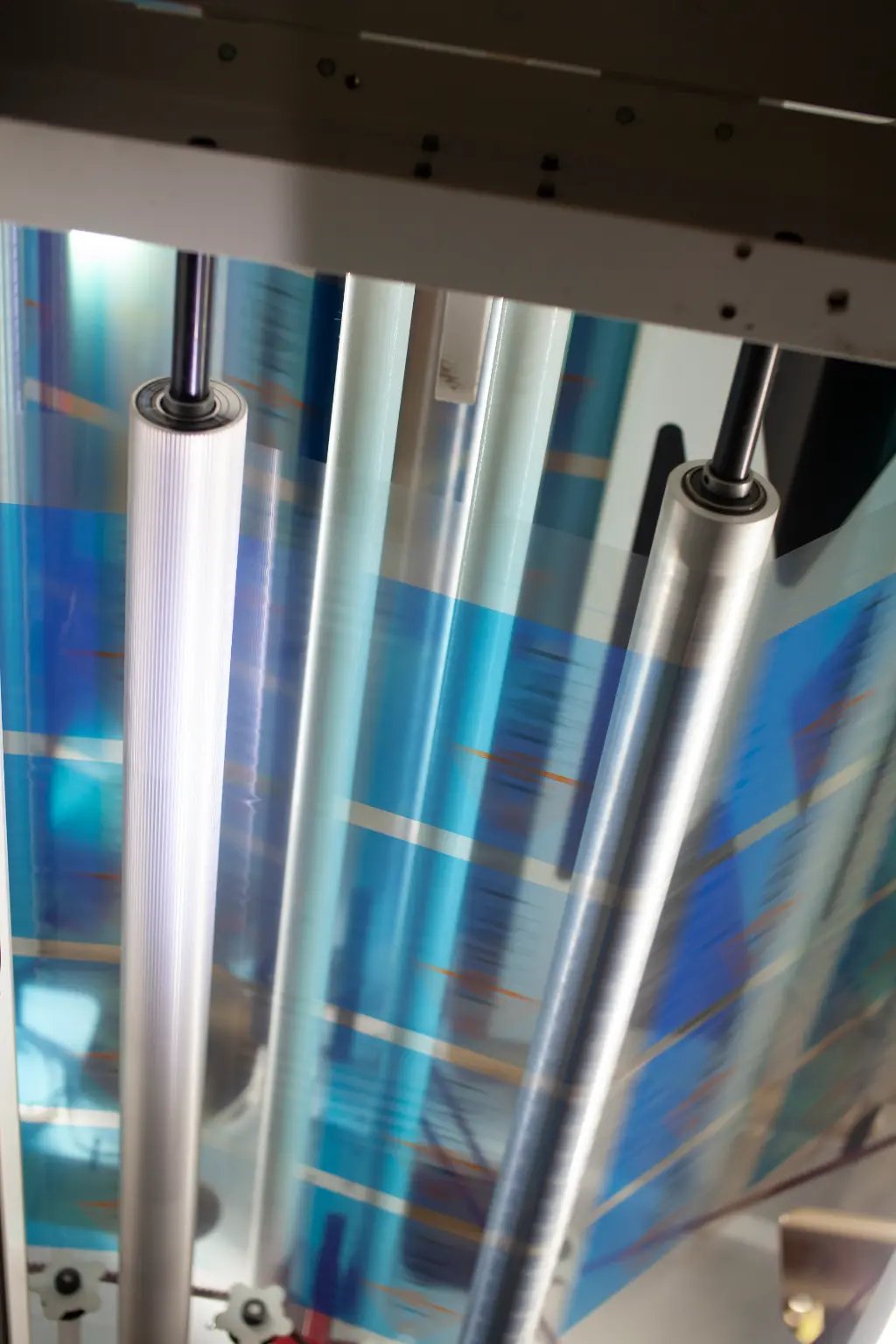
Calender rolls in extrusion lines compress and condition freshly extruded polymer film or sheet, setting final thickness, surface gloss, and dimensional stability. Surface finish and temperature uniformity directly affect optical clarity, gauge consistency, and downstream converting performance. 
7-services
Battery Electrode Manufacturing

Battery Electrode Manufacturing

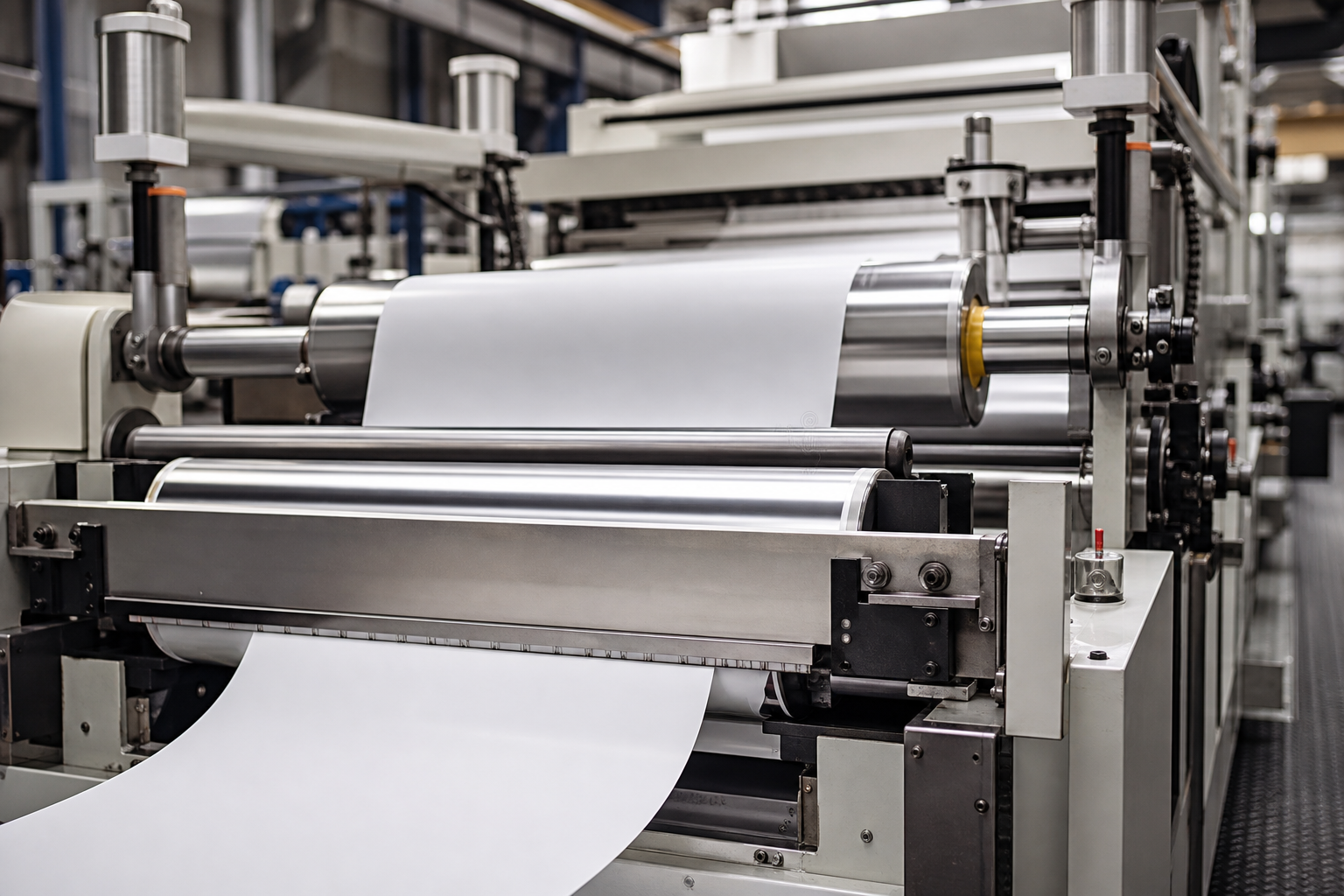
Calendering is a critical step in lithium-ion battery electrode production, compressing the coated electrode material to precise density and thickness specifications. Calender roll geometry, surface finish, and pressure uniformity directly affect electrode porosity, energy density, and battery cell performance — making roll quality a direct contributor to finished cell quality. 
Web Coating Process with Heat Transfer Rolls
Nonwovens Compression & Thermal Bonding

Nonwovens Compression & Thermal Bonding

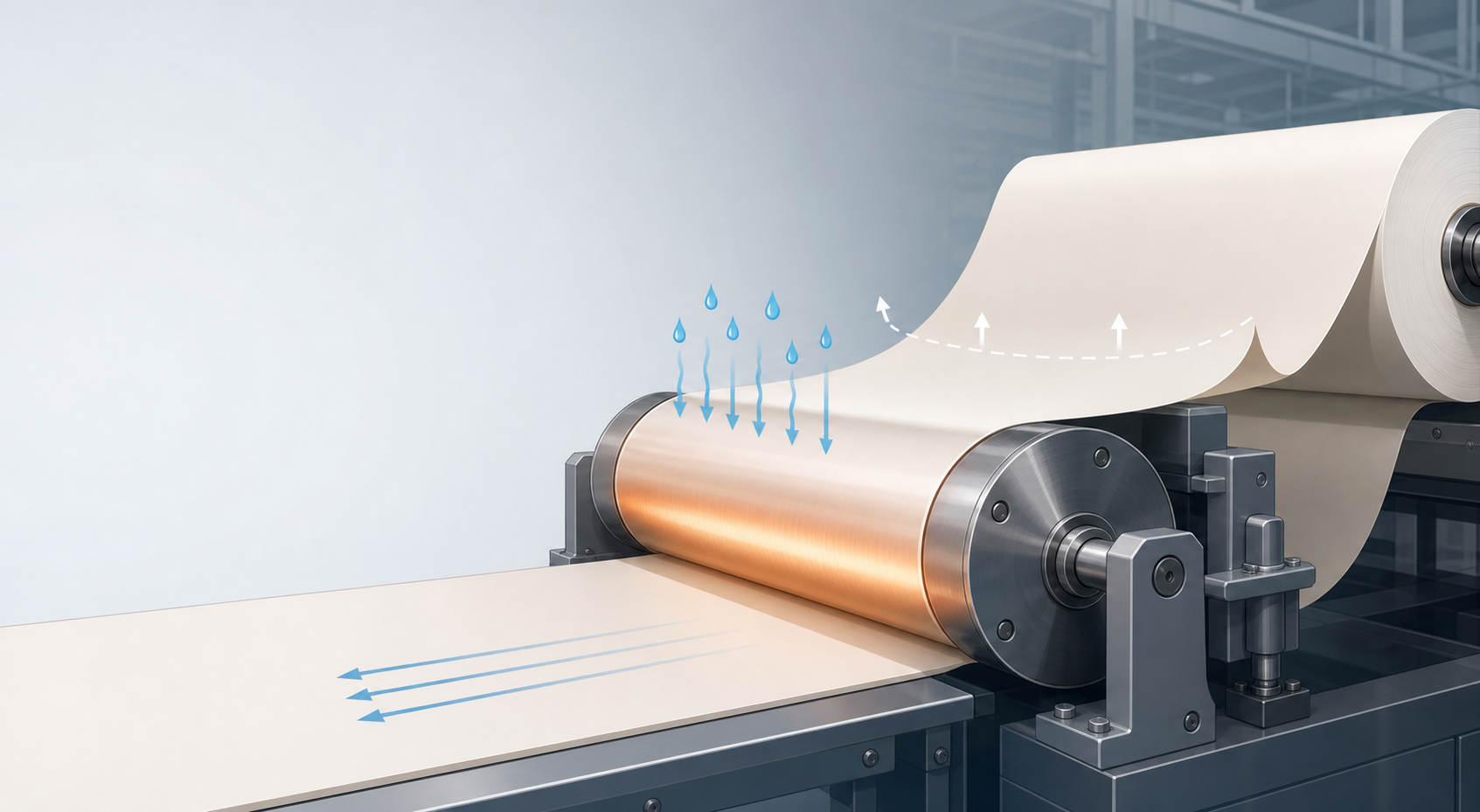
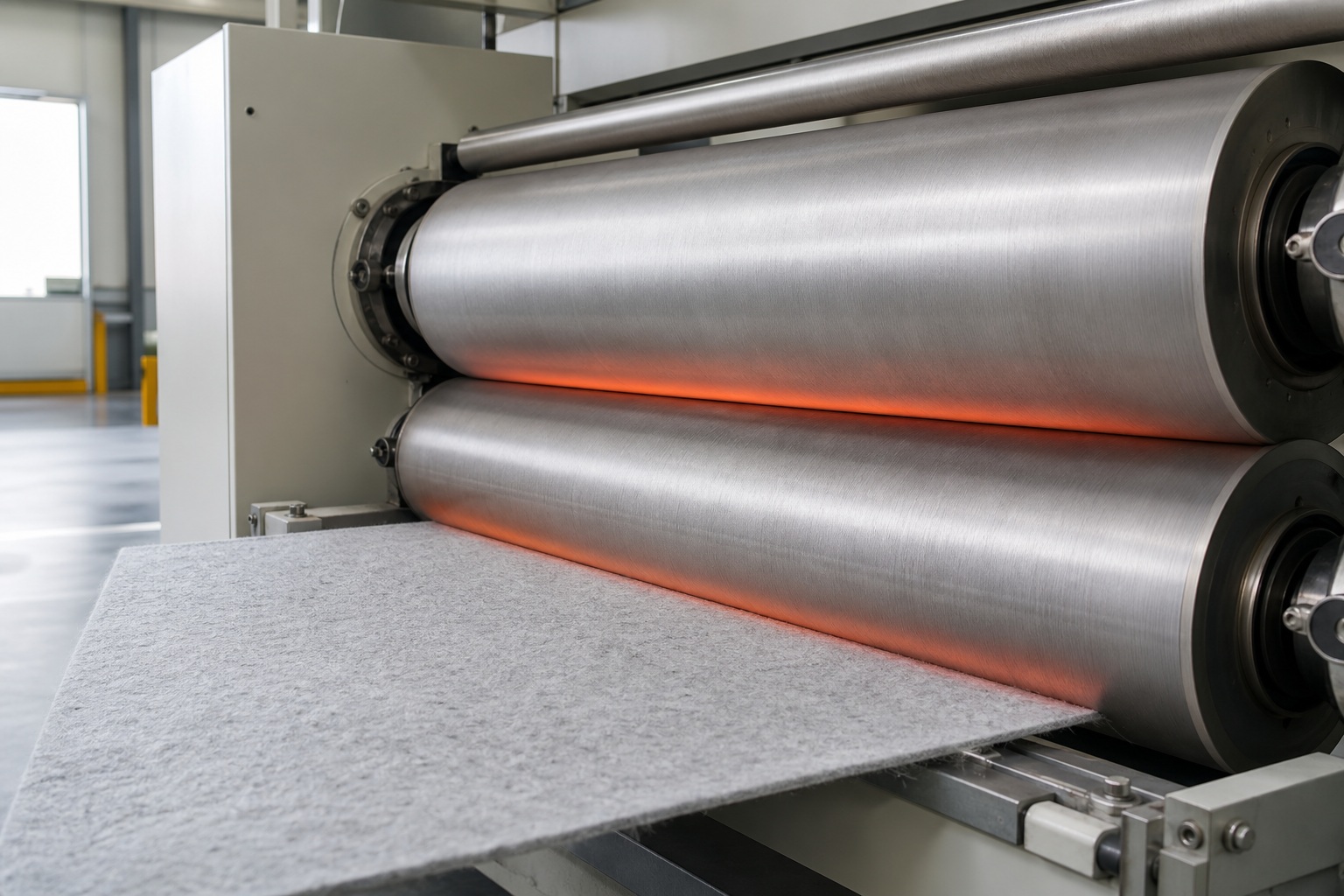
Thermal bonding nonwovens uses heated calender rolls to bond fibers at controlled temperature and pressure, setting fabric structure, strength, and tactile properties. Engraved calender rolls produce patterned bond points for hygiene, medical, and filtration substrate applications. 
Heat Transfer Rolls Managing Paper Curl
Laminated Composites

Laminated Composites

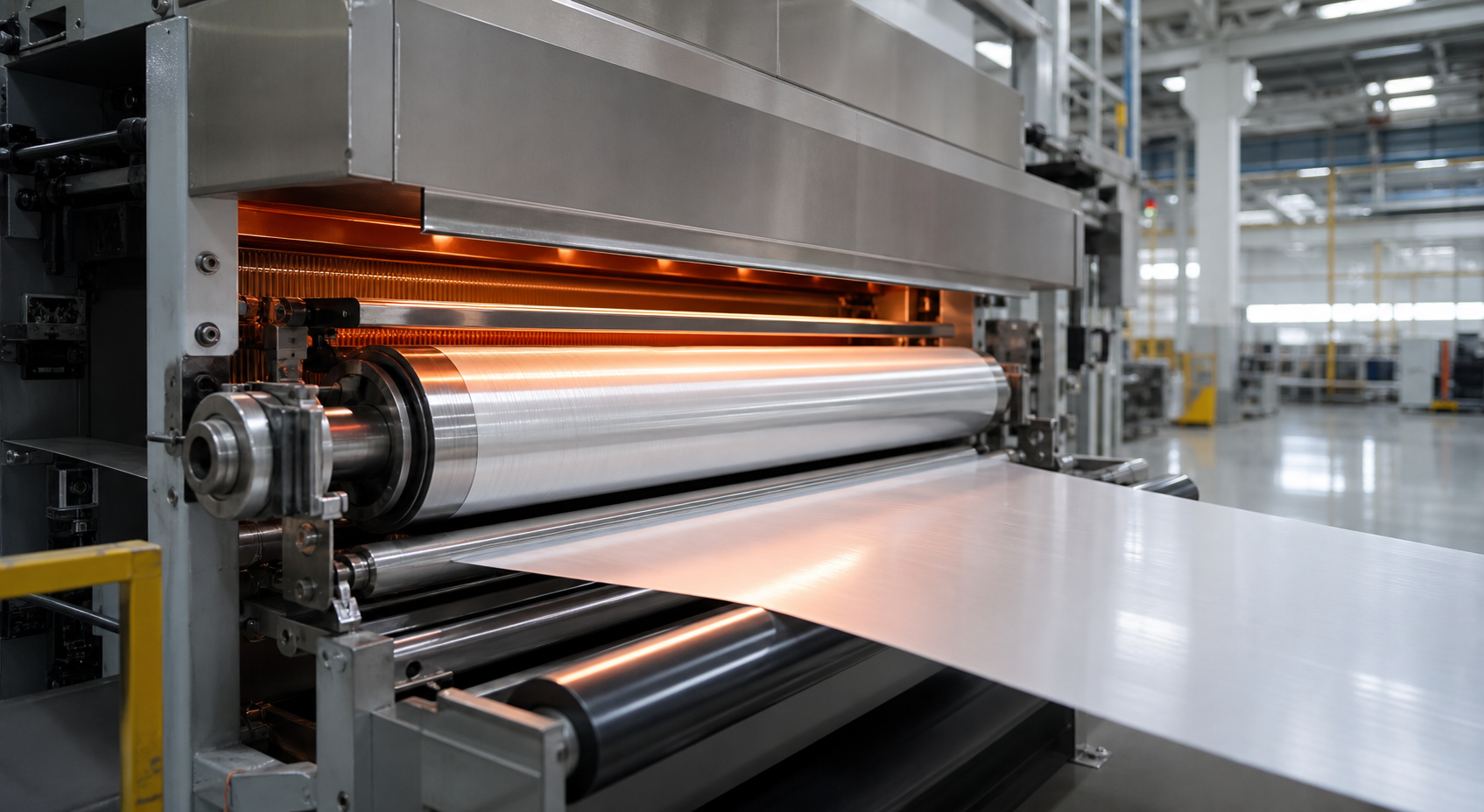
Calender rolls in lamination operations apply controlled pressure to bond multi-layer composite structures. Pressure uniformity across the web width is critical to consistent bond strength and laminate appearance. 
Industrial Coating Heat Transfer Rolls
High-Gloss Finishing & Surface Modification

High-Gloss Finishing & Surface Modification

Mirror-finished calender rolls deliver high-gloss surface finish to films, papers, and specialty substrates. Surface finish on the roll transfers directly to the substrate — making roll surface specification a direct quality variable. 
Thermal Bonding Nonwovens Process
Nonwovens (Thermal Bonding & Calendering)

Nonwovens (Thermal Bonding & Calendering)

Thermal bonding nonwovens uses heated calender rolls to bond fibers at controlled temperature and pressure, setting fabric structure, strength, and tactile properties. Engraved calender rolls produce patterned bond points for hygiene, medical, and filtration substrate applications. 
calender rollers
Coated & Calendered Paper

Coated & Calendered Paper

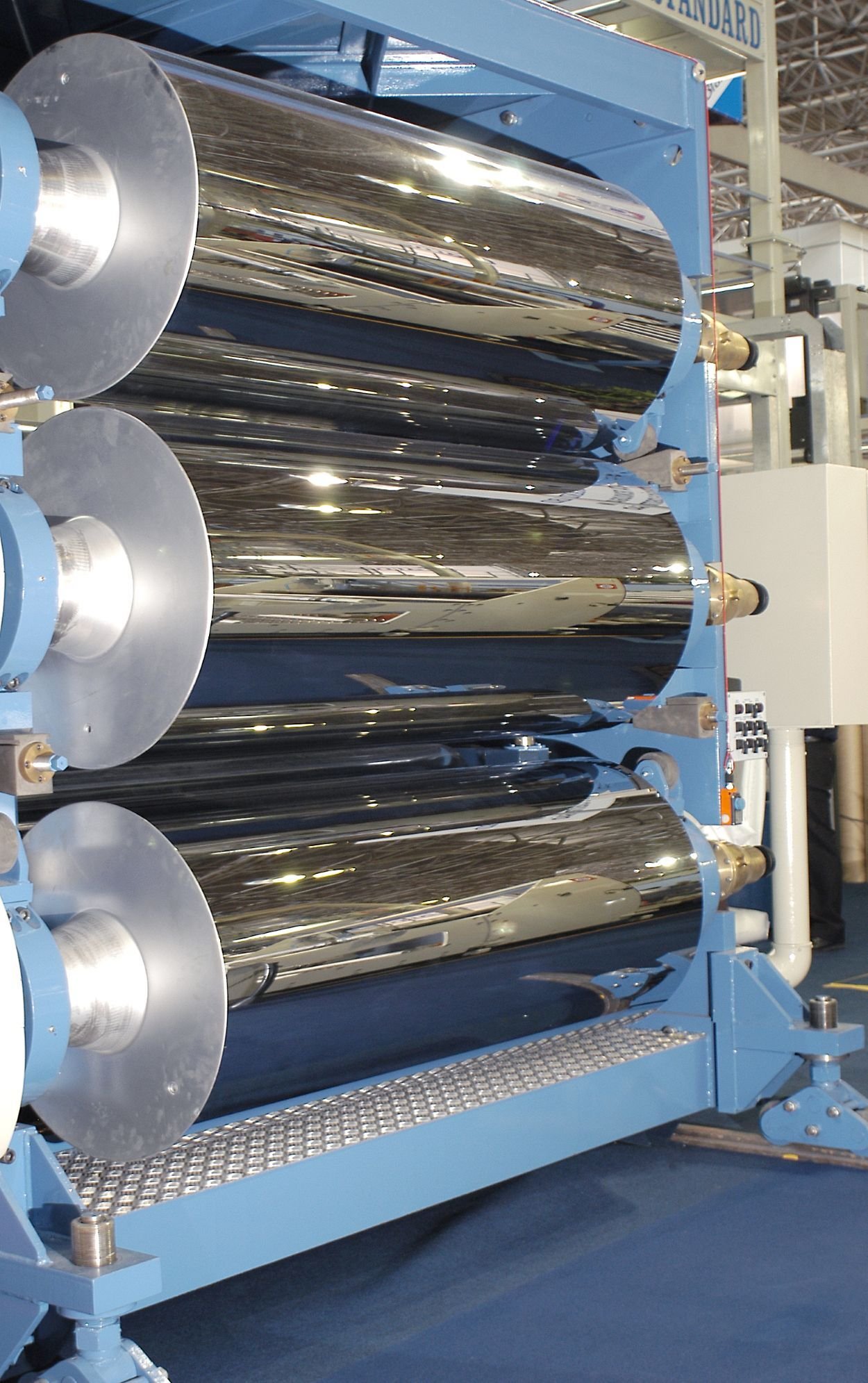
Paper calendering operations compress and smooth paper substrates to achieve specified caliper, density, and surface smoothness for printing or converting downstream. Multi-roll calender stacks rely on coordinated roll specifications across the entire stack. 
Hot Melt Adhesive Patterns-1
Packaging Substrates

Packaging Substrates

 Calender rolls condition packaging substrates — flexible films, paperboard, laminates — for downstream printing, coating, or converting. Surface finish and dimensional stability are the primary outcomes. 
Cooling Towers Web Conditioning
Specialty Industrial Films

Specialty Industrial Films

Optical films, anti-static films, conductive films, and other specialty industrial substrates rely on calendering for thickness control, surface preparation, or property activation. Tight tolerance specifications are standard for these applications. 
Calender Roll Configuration Selection Guide 

The right combination of construction type, deflection control, surface finish, and thermal capability depends on your substrate, line pressure, web width, and process outcome. Use this guide as a starting point — PRS engineering will validate the configuration for your application. 

Application / Requirement
Recommended Configuration
Why
Standard film extrusion (cast film, sheet)
Heated Single-Shell + Mirror Finish + Chrome
Mirror surface transfers to film for optical clarity; chrome plating delivers wear resistance; heated construction sets film structure during cooling
Battery electrode calendering (Li-ion)
Hardened Steel + Mirror Finish + Tight Tolerance
Electrode density and thickness uniformity demand the tightest dimensional tolerances; surface finish controls electrode interface quality
Wide-web nonwovens thermal bonding
Heated Double-Shell + Engraved Pattern + Controlled Deflection
Wide-web pressure uniformity requires deflection control; engraved pattern produces bond point geometry; heated construction sets fiber bond
High-pressure paper calendering
Controlled-Deflection (CC) Rolls + Hardened Surface
High pressure on wide paper webs produces significant deflection without compensation; controlled-deflection rolls maintain consistent caliper edge-to-edge
Specialty films (optical, conductive, thin)
Heated Single-Shell + Specialty Coating
Thin or sensitive films require precise temperature and surface control; specialty surface coatings selected for substrate compatibility
Laminated composite production
Heated Double-Shell + Crowned Profile
Crown profile compensates for deflection under lamination pressure; double-shell construction delivers thermal performance and rigidity
Light-duty calendering (low pressure)
Single-Shell + Standard Surface
Cost-effective construction for applications where deflection is minimal and tolerance requirements are moderate
OEM machine replacement
Specification Matched to Original Configuration
PRS engineering matches all dimensional, thermal, and surface specifications to original OEM unit; roll identification available if specs unknown


Calender Roll Specifications  

PRS calender rolls are manufactured to print or engineered custom to the end-user's application. The following represents our standard capabilities — contact us to discuss your line specifications and process requirements.

Spec
Details
Wall Construction
Single-shell, double-shell, heated, or controlled-deflection designs
Thermal Control
Heated or chilled configurations available; ±1°F surface temperature tolerance for thermal applications
Deflection Control
Crowning, controlled-deflection internal hardware, or paired-roll geometry available
Surface Finishes
Mirror-polished, matte, textured, engraved patterns, chrome plated, specialty coatings
Materials
Steel, stainless steel, hardened tool steels, and specialty alloys per thermal and mechanical demands
Face Length & Diameter
Fully custom to OEM lines or custom process builds
Tolerances
Precision-ground and balanced to meet runout and concentricity targets for each application
Engineering
Manufactured to print or designed to application requiremts
Integration
PRS designs and supplies calender rolls integrated with PRS custom calender equipment and embossing systems
Geographic Coverage
United States and Canada; international shipping available

Calender Roll Service & Refurbishment 


Ready to specify your calender roll set?  

Our engineering team works directly with you to design the construction, deflection compensation, surface finish, and thermal performance that matches your substrate, line pressure, and production outcomes. From OEM replacement rolls to complete custom calender equipment, PRS engineering is the partner that handles every component. Serving US and Canadian converters and battery manufacturers 

Resources for Web processors and battery manufacturers

 Use these resources to support specification development, application evaluation, and supplier selection. 

Custom Calender Equipment

 PRS designs and builds complete calendering equipment — full machine packages incorporating engineered calender roll sets, drives, controls, and integration with downstream converting lines. → 

Product Page

PRS Buyer's Guide 

An overview of PRS roll capabilities —  including calendering rolls — to support vendor evaluation and specification development. 

Buyer's Guide

Related Product: Heat Transfer Rolls

PRS heat transfer rolls for temperature-controlled web processing — often used alongside vacuum tension rolls in coating and laminating lines.

Product

Full roll lifecycle services  

 Full lifecycle services for calender rolls — surface refinishing, re-chroming, re-engraving for patterned rolls, internal cleaning for heated rolls, journal repair, and precision rebalancing. → 

Service

Frequently Asked Questions

Common questions about calender roll service, refurbishment, repair, performance issues. 

What is a calender roll and how does it work?

 A calender roll — also called a calendering roller — is a precision-engineered cylindrical roller used in a calendering nip to apply controlled pressure, and often controlled temperature, to a moving web. Calendering operations pass the web between two or more rolls under high nip pressure, compressing the substrate to achieve a specific outcome — densification, surface smoothing, thickness reduction, lamination, surface finishing, or thermal bonding. The calendering nip can be configured as two rolls, three rolls, or as a multi-roll stack, depending on the process requirements and the substrate being processed. Calender roll performance depends on dimensional precision, deflection control under load, surface finish, and (for heated rolls) thermal uniformity across the working face. 

What is the difference between a calender roll and a calendering roller?

 The terms are used interchangeably across the industry — both refer to the same equipment used in calendering operations. "Calender roll" is the more common abbreviated form in converting and battery manufacturing markets; "calendering roller" is sometimes used in equipment specification documents and engineering drawings. Functionally and dimensionally, they are identical. PRS supplies calender rolls and calendering rollers across all major converting and industrial markets. 

What construction types does PRS offer for calender rolls?

 PRS offers four primary construction types. Single-shell design is the most common, with a precision-ground outer shell and journal assembly — appropriate for most converting applications. Double-shell design uses an inner shell mechanically supporting the outer shell, providing maximum rigidity, deflection control, and (when heated) tight thermal performance. Heated construction incorporates internal flow path channels for thermal fluid circulation — selected based on the operating temperature and uniformity requirements. Controlled-deflection construction uses internal hardware that actively compensates for roll bending under load, maintaining uniform nip pressure across wide web widths and high-pressure applications. The right construction type depends on your operating pressure, web width, thermal requirements, and substrate sensitivity. 

What is roll deflection and why does it matter in calender rolls?

 Roll deflection refers to the bending of the calender roll along its length under nip load. When a calender roll is loaded against another roll, the resulting force causes the unsupported portion of the roll (between the two journal bearings) to bend slightly — typically just a few thousandths of an inch, but enough to produce measurable variation in nip pressure from the roll edges to the roll center. The result is that pressure is highest at the edges of the web and lowest at the center, producing thickness variation, density variation, or finish variation across the web width. For narrow webs and light-duty calendering, this deflection is often negligible. For wide webs, high-pressure applications, and tight-tolerance products like battery electrodes or optical films, deflection compensation is essential. PRS offers three deflection compensation approaches: crowning (machining the roll with a slight increase in diameter at the center to offset deflection), controlled-deflection construction (internal hardware that actively counteracts bending), or paired-roll geometry (matched roll profiles that combine to deliver uniform pressure). 

Why are calender rolls critical to battery electrode manufacturing?
 Battery electrode calendering is the process step where the coated electrode material — typically deposited on a copper or aluminum foil substrate — is compressed to a precise density and thickness specification. This compression directly affects the porosity of the electrode active material, which in turn determines ionic conductivity, energy density, cycle life, and overall battery cell performance. Calender roll dimensional precision, surface finish, and pressure uniformity translate directly into electrode quality variation, and electrode variation translates directly into cell-to-cell performance variation in the finished battery. As a result, battery electrode calendering demands tighter dimensional tolerances, surface specifications, and deflection control than most other calendering applications. PRS engineers calender rolls specifically for battery electrode applications across emerging chemistries. 


What surface finishes are available for PRS calender rolls?

 PRS offers a full range of surface finishes. Mirror-polished finish (typically achieved through chrome plating and precision polishing) is standard for optical film, high-gloss paper, and battery electrode applications where any surface texture would transfer to the substrate. Matte and textured finishes are used where moderate substrate traction is required without affecting product appearance. Chrome plating is standard for most applications requiring wear and corrosion resistance. Engraved patterns are used for nonwoven thermal bonding, where the engraved pattern produces controlled bond points across the fabric. Specialty coatings — including ceramic, plasma, and high-release surfaces — are available for chemical compatibility, release performance, or extended service life. Surface finish should be specified in coordination with the substrate, downstream process requirements, and operating conditions. 

What materials are PRS calender rolls manufactured from?

 PRS calender rolls are manufactured from a range of materials selected based on operating temperature, mechanical load, chemical compatibility, and required service life. Carbon steel is the standard material for most converting calender applications. Stainless steel is used where corrosion resistance is required — including water-based coating environments and pharmaceutical substrate processing. Hardened tool steels are used for high-pressure and high-wear applications, particularly in battery electrode calendering and engraved nonwoven calenders. Specialty alloys are available for elevated-temperature operation or specific chemical compatibility requirements. Material selection should always be made in coordination with operating conditions and expected service life. 

Can PRS supply calender rolls for OEM and legacy machine configurations?

 Yes. PRS regularly supplies replacement and upgrade calender rolls for OEM converting and calendering equipment across the full range of major machine builders, as well as legacy machines where original equipment suppliers may no longer be active. PRS engineering works from customer-supplied specifications, existing roll measurements, or machine drawings to produce replacement rolls that match the dimensional, thermal, and performance requirements of the original. For unmarked or unidentified existing rolls, PRS's roll identification service can evaluate the existing unit and establish a specification baseline before replacement engineering begins. 

Does PRS supply complete calender equipment in addition to individual rolls?

 Yes. PRS designs and builds complete custom calender equipment — full machine packages incorporating engineered calender roll sets, drives, hydraulic loading systems, temperature control systems, and integration with upstream and downstream converting equipment. This capability allows PRS to deliver complete process solutions for new line installations, capacity expansions, or process upgrades. For customers who only need replacement rolls for existing equipment, PRS supplies individual calender rolls or matched sets engineered to the existing machine configuration. The complete equipment capability is detailed at the PRS Custom Calender Machine page. 

Can PRS service and refurbish calender rolls from other manufacturers?

 Yes. PRS provides service and refurbishment for PRS-built and customer-supplied calender rolls regardless of original manufacturer. Service capabilities include dimensional inspection (runout, concentricity, surface condition), surface refinishing through re-grinding and re-chroming, re-engraving for patterned nonwoven calender rolls, internal flow path cleaning for heated rolls, seal package replacement, journal repair, precision rebalancing, and crown profile restoration. Service begins with a condition assessment to identify what work is needed and a refurb-versus-replace recommendation based on the extent of wear. 

How are calender rolls used in nonwoven thermal bonding?

 Thermal bonding nonwovens uses heated calender rolls to bond fibers at controlled temperature and pressure as the fabric passes through the calendering nip. The result is a bonded nonwoven fabric with controlled strength, stiffness, and tactile properties — used in hygiene products, medical fabrics, filtration media, and industrial nonwovens. Two configurations are common: smooth-to-smooth calendering produces uniform fabric with maximum bond area, while engraved-to-smooth or engraved-to-engraved calendering produces patterned bond points that preserve fabric softness while delivering structural integrity. PRS supplies both smooth and engraved calender rolls for nonwoven applications, with engraved patterns produced by PRS's engraving capabilities and surface specifications matched to the specific fabric formulation. 

What industries use calender rolls?

 Calender rolls are used across a wide range of industries where web compression, finishing, or bonding is required. The primary markets include film extrusion (cast film, sheet, specialty films) where calender rolls set final film structure; battery electrode manufacturing (lithium-ion and emerging chemistries) where calendering controls electrode density and performance; nonwovens manufacturing where heated calender rolls deliver thermal bonding for hygiene, medical, and industrial fabrics; paper and paperboard finishing where multi-roll calender stacks deliver caliper, density, and surface smoothness; laminated composite production where calendering applies controlled pressure for bond consistency; packaging substrate conditioning; high-gloss surface finishing; and specialty industrial film production. PRS serves all of these markets with custom-engineered calender rolls and complete custom calender equipment. 

Does PRS serve Canadian converters and manufacturers in addition to the US?
 Yes. PRS serves calender roll customers across the globe. We supply new custom-engineered rolls, replacement rolls for OEM and legacy machine configurations, complete custom calender equipment, full service and refurbishment, and field installation and commissioning support to converting, battery, nonwoven, paper, and specialty manufacturing operations across all major global. Our engineering team handles cross-border specification, logistics, and customer service coordination as part of our standard process. 
Back to top

Connect with PRS Calender Roll Experts 

 Questions about calender roll specification, deflection control, surface finish, thermal performance, or complete calender equipment? The PRS engineering team serves converters, battery manufacturers, nonwoven producers, paper mills, and specialty processors across the US and Canada — from first specification through complete machine builds and ongoing refurbishment. 


Request A Consultation