


Engraved Rolls · Corrugated · Made in USA · ARC International
Glue Applicator & Metering Rolls for Corrugated
Precision Roll Solutions manufactures glue applicators and metering rolls for corrugated single facers and glue machines across the US and Canada.
ENGINEERED FOR CONSISTENT COATING, METERING, AND PERFORMANCE
PRS manufactures glue applicator rolls and metering rolls for corrugated single facers, single-wall glue machines, and double-wall corrugators — in any size, for any OEM configuration. Manufactured to tighter TIR specifications than original equipment manufacturers. Custom cell engraving from North America's largest mechanical engraving tool library. New roll sets and full reconditioning available. Serving corrugated plants across the United States and Canada.
✓ Any OEM — any size · Tighter-than-OEM TIR
North America's largest mechanical engraving tool library

Tighter than OEM
TIR Specification
Any Size
OEM Compatibility
Custom Cell
Engraving Patterns
US & Canada
Coverage
How Glue Applicator and Metering Rolls Work
In corrugated board manufacturing, the glue applicator roll and metering roll — sometimes called the doctor roll — work together as a matched set to control the amount of starch adhesive applied to the flute tips at the single facer and glue machine. The two rolls function as a precision gap system: the glue applicator roll rotates through the starch bath, picks up adhesive across its engraved surface, and transfers it to the corrugated medium; the metering roll runs against the applicator roll at a precisely controlled gap, doctoring the adhesive film down to the correct thickness before it reaches the flute tips.
The gap between the glue applicator roll and the metering roll is the primary control variable in starch application. Industry data consistently shows that even small deviations in this gap — caused by TIR (Total Indicated Runout) issues, roll wear, or out-of-parallel conditions — directly increase starch consumption, cause board warp, and reduce bond consistency. A glue roll with only 0.005 inches of TIR runout can cost a mid-size corrugator over $1,000 per month in excess starch consumption alone, before accounting for board quality rejects and line speed reductions.
The engraved cell pattern on the glue applicator roll controls how much adhesive the roll picks up from the bath and how it releases to the medium. Cell count (measured in lines per inch, LPI), cell angle, cell depth, and cell volume all influence adhesive film thickness, starch transfer efficiency, and how the roll responds at different corrugator speeds and flute profiles. PRS maintains North America's largest mechanical engraving tool library, enabling custom cell pattern design across the full range of OEM configurations — including legacy machines where original cell patterns may no longer be commercially available.
Key Variables in Glue Roll and Metering Roll Performance
TIR (Total Indicated Runout)
Cell Pattern & LPI
Metering Gap
Surface Treatment
Roll Balance
OAL & Diameter
Glue Roll & Metering Roll Configuration Selection Guide
The right combination of surface treatment, cell pattern, and TIR specification depends on your machine type, corrugator speed, flute profile, starch system, and maintenance cycle. Use this guide as a starting point — PRS engineering will work with you to confirm the optimal specification for your specific application.
Glue Applicator & Metering Roll Specifications
All PRS glue and metering rolls are manufactured to customer-supplied or OEM-matched specifications. The following represents our standard capability range — contact us to discuss your machine, flute profile, and corrugator speed requirements.
Ready to specify your glue roll set?
Our engineers work with you to match cell pattern, TIR specification, surface treatment, and OEM dimensions — whether you need new sets, a reconditioned matched pair, or a custom cell pattern for a legacy machine. Serving corrugated plants across the US and Canada.
Glue Applicators & Metering Rolls Services
Restore the performance of your glue applicator and metering rolls with reconditioning and lifecycle services built for demanding corrugated operations. From full-roll audits and diameter rebuilds to re-chroming, re-engraving, and legacy roll identification, PRS helps extend roll life, improve consistency, and restore rolls to their original or updated operating specifications.
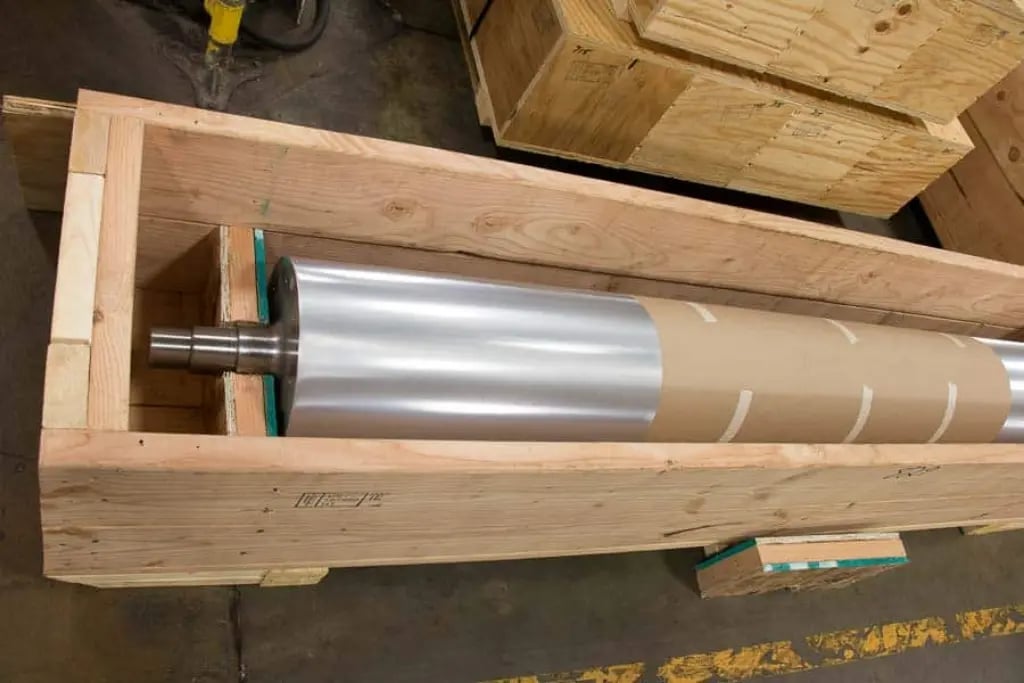
Roll Reconditioning & Lifecycle Services
PRS offers full audit and reconditioning services for glue applicator and metering rolls, extending roll set service life and restoring performance to original or updated specifications.
-
Full roll set audit — TIR measurement, diameter check, cell pattern evaluation, surface condition assessment
-
Re-chroming for metering rolls with worn chrome and intact core geometry
-
Stainless steel diameter rebuild for glue applicator rolls with worn OD
-
Re-engraving with original or updated cell patterns from PRS/IR tool library
-
Journal repair and precision rebalancing
-
Legacy roll reconditioning for discontinued OEM configurations
-
Roll identification for unmarked or unknown-spec rolls
-
Refurb vs. replace evaluation with written recommendation
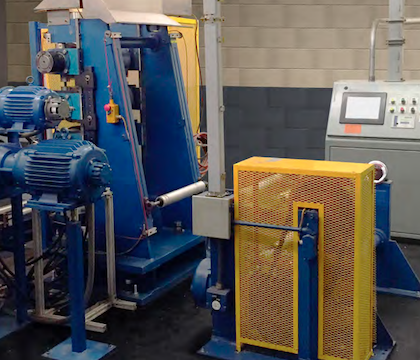
Supporting Services & ARC Corrugated Products
PRS and ARC International together cover the full corrugated roll and converting component supply chain — from glue roll sets through anilox rollers, wiper rolls, feed rolls, and doctor blade systems.
-
ARC glue applicator rollers — stainless steel cladded, Arc-Jet stainless, and chrome plated options
-
ARC meter rollers — fabricated or reconditioned to OEM specifications; 32 RMS finish
-
ARC Starch Saver Series (SS100, SS200, SS300) — 45° and 60° cell configurations engineered for reduced starch consumption
-
ARC anilox rollers for corrugated post-print flexographic applications
-
ARC wiper rolls, feed rolls, and knife rolls for corrugated converting lines
-
ARC carbon fiber doctor blade chamber systems for post-print flexo
-
Roll identification service for unmarked legacy corrugated rolls
-
Spare parts and precision machining for corrugator components
RESOURCES FOR Glue applicator and metering roll BUYERS
Use these resources to support specification development, roll evaluation, and supplier selection.
PRS Buyer's Guide
An overview of PRS engraved roll capabilities — including glue and metering rolls — to support vendor evaluation and specification planning.
ARC Glue Applicator Rollers
ARC International's full range of glue applicator rollers for corrugated — stainless cladded, Arc-Jet stainless, chrome plated, and Starch Saver Series.
ARC Meter Rollers
ARC meter rollers cylindrically ground to minimize TIR and taper — fabricated or reconditioned to OEM specifications with 32 RMS finish.
Full roll lifecycle services
From TIR audit and condition assessment through re-engraving, re-chroming, stainless rebuild, and final balancing.
Frequently Asked Questions
Common questions about glue applicator rolls, metering rolls, TIR specifications, cell pattern selection, and PRS capabilities for corrugated manufacturing plants in the US and Canada.
A glue applicator roll — also called a glue roll or starch applicator roll — is a precision-engraved steel cylinder used in corrugated board manufacturing to pick up starch adhesive from the glue pan and transfer it to the tips of the corrugated medium flutes before bonding. The roll's surface is engraved with a pattern of cells (measured in lines per inch, LPI) that control how much adhesive the roll picks up from the bath and how consistently it transfers that adhesive to the flute tips. As the glue applicator roll rotates, the metering roll — running at a precisely controlled gap against the applicator — doctors the adhesive film down to the correct thickness for the board grade and flute profile being run. The gap between these two rolls is the primary control variable for adhesive application rate, and its consistency across the machine width and throughout the speed range is determined directly by the TIR (Total Indicated Runout) of both rolls.
The metering roll — also referred to as the doctor roll in some corrugated markets — runs against the glue applicator roll at a precisely controlled gap, removing excess adhesive from the applicator roll surface and leaving a controlled film of starch available for transfer to the flute tips. The metering roll does not carry adhesive itself; its function is purely to regulate the film thickness on the applicator roll. Metering roll performance depends on its surface finish (standard is 32 RMS), its TIR and taper (which determine gap consistency across the machine width), and its surface treatment (chrome, tungsten carbide, or ceramic, depending on the machine speed and service life requirements). PRS metering rolls are cylindrically ground to minimize TIR and taper to tighter-than-OEM tolerances, which is the single most impactful specification for consistent adhesive application.
TIR — Total Indicated Runout — measures how much the roll surface deviates from a perfect cylinder as it rotates. In a glue roll system, TIR directly determines gap consistency: a roll that is out of round causes the gap between the glue applicator and metering roll to open and close with every revolution, which changes the adhesive film thickness from thick to thin continuously across the production run. To compensate for thin spots, operators typically widen the average gap setting, which increases total starch consumption. Industry analysis consistently shows that even 0.005 inches of TIR runout can cost a corrugated plant over $1,000 per month in excess starch consumption for a facility producing 50 million square feet per month — before accounting for board quality variation, reject rates, and warp-related converting issues. PRS manufactures glue and metering rolls to tighter TIR specifications than OEM, directly reducing these hidden operating costs.
Glue applicator roll cell patterns are characterized by their line count (LPI), cell angle, and cell geometry. The most common configurations are quadrangular and pyramid cells at 45° or 60° angles, ranging from approximately 16 to 65 LPI. Lower LPI patterns (16–25 LPI) carry more adhesive per unit area and are typically used on single facer applications and heavier board grades where higher coat weights are required. Higher LPI patterns (40+ LPI) deliver thinner, more controlled adhesive films and are used for double backer applications, lighter board grades, and micro-flute profiles where precise adhesive control is critical to preventing washboarding and warp. Cell angle also affects adhesive release characteristics — 60° cell configurations are increasingly specified in starch-reduction programs because the cell geometry improves release efficiency, reducing the adhesive volume required to achieve consistent bond strength. PRS maintains North America's largest mechanical engraving tool library, enabling custom cell pattern selection and reproduction across the full range of OEM configurations.
Several surface treatments are available for both glue applicator and metering rolls, each with different corrosion resistance, hardness, and service life characteristics. Chrome plating is the most common and cost-effective treatment for both roll types — it provides reasonable hardness and corrosion resistance in standard starch environments. Stainless steel cladding (AST welded stainless) provides significantly better corrosion resistance than chrome and eliminates the porosity issues that can cause starch adhesion on chrome surfaces; stainless glue rolls are increasingly specified in high-speed and micro-flute operations. Tungsten carbide surfaces offer the highest hardness and wear resistance available for metering rolls — they are preferred in high-speed environments where doctor roll wear is a significant maintenance cost. Ceramic metering roll surfaces provide similar hardness to tungsten carbide with the added benefit of very low surface porosity, which improves starch release and simplifies cleaning. PRS offers all of these treatments, and the selection should be made in the context of your machine speed, maintenance cycle, and total cost-of-ownership objectives.
Yes. PRS supplies new glue applicator and metering roll sets for any OEM corrugator platform — Langston, BHS, FOSBER, MHI, Marquip, Koppers/Leybold, United, and all other major brands. For legacy machines where original OEM specifications may no longer be available, PRS maintains North America's largest mechanical engraving tool library, which means we can reproduce cell patterns for machines where the original supplier is no longer active or the tooling is no longer commercially available. If your existing rolls are unmarked or the cell pattern is unknown, PRS's roll identification service can evaluate your current rolls, measure the cell pattern, and establish a replacement specification. Contact PRS with your machine make, model, and roll dimensions to confirm availability and lead time.
PRS's audit and reconditioning service begins with a full evaluation of your existing roll set — measuring TIR, outside diameter, cell pattern condition, surface treatment wear, and journal and bearing surface geometry. The audit produces a written assessment of each roll's condition and a refurbish vs. replace recommendation based on the extent of wear. Reconditioning can include re-chroming for metering rolls with worn chrome and intact core geometry, stainless steel diameter rebuild for glue applicator rolls that have lost OD due to wear or re-grinding, re-engraving with original or updated cell patterns from the PRS/IR tool library, journal repair, and precision rebalancing. Reconditioning is typically the right choice when the roll core and journal geometry are within acceptable tolerances and the degradation is limited to the engraved surface or surface treatment. Replacement is indicated when core integrity has been compromised or when the economics of reconditioning approach the cost of a new set.
Glue and metering roll condition directly impacts board quality in several ways. Out-of-round rolls (TIR issues) cause adhesive film thickness to vary with every revolution, producing periodic bond variation, delamination, or visible banding in the finished board. Out-of-parallel rolls — where the gap between glue and metering roll is wider on one side than the other — cause side-to-side adhesive variation, resulting in one-sided warp that cannot be corrected by heat or tension adjustments downstream. Worn cell patterns on the glue applicator roll reduce adhesive pickup capacity, which operators typically compensate for by widening the gap or increasing starch concentration — both of which increase operating costs and reduce board quality consistency. Excess adhesive application from any of these conditions also increases moisture content in the board, slowing the drying process, reducing corrugator throughput, and increasing warp rates in the converting operation. Regular TIR checking — industry practice recommends at minimum weekly — combined with proactive reconditioning is the most cost-effective corrugated maintenance strategy.
The ARC Starch Saver Series (SS100, SS200, SS300) is a range of glue applicator rolls featuring 45° and 60° cell configurations engineered specifically to reduce starch consumption while maintaining consistent bond strength. The key improvement in the Starch Saver series is the cell geometry: the 60° cell angle improves ink-and-fluid release dynamics, meaning the adhesive releases more completely from the cell at each flute contact and leaves less residual starch in the cell to dry and accumulate. The result is a measurably thinner, more uniform adhesive film at equivalent bond strength — which reduces total starch consumption per thousand square feet of board produced. In a market where industrial starch costs have been highly volatile, reducing consumption per MSF is a direct operating cost saving for the corrugated plant. PRS and ARC supply the full Starch Saver Series for all major OEM single facer and glue machine configurations.
Yes. PRS and ARC International serve corrugated manufacturing customers across the United States and Canada. We supply new glue roll sets, matched metering roll pairs, Starch Saver Series rolls, and full reconditioning services to corrugated plants in all major North American markets. Our engineering team handles cross-border specification, logistics, and customer service coordination as part of our standard process. Contact PRS directly to discuss your plant location, machine configuration, and roll requirements.
Industry best practice for corrugated glue roll maintenance recommends checking the gap between glue and metering rolls with feeler gauges at least once per day — and once or twice per shift for plants running high speeds or micro-flute profiles. TIR should be measured for all stations at minimum weekly. When TIR exceeds OEM specifications, adhesive consumption and board quality issues typically follow within days, not months. The economic decision to recondition or replace rolls should be based on measured TIR and surface condition rather than a fixed time interval, since service life varies significantly by corrugator speed, board grade, starch chemistry, and maintenance practices. PRS's audit service provides an objective, measurement-based assessment that supports informed maintenance planning and budget forecasting for roll set replacement cycles.
No — glue applicator rolls and metering rolls are not interchangeable and should not be substituted for one another. The glue applicator roll is an engraved roll that picks up starch adhesive from the glue pan and transfers it to the flute tips; its engraved cell pattern is a designed feature that controls adhesive pickup volume. The metering roll is a smooth or very finely finished (32 RMS) cylinder that runs against the applicator roll at a controlled gap to doctor the adhesive film; it is not engraved and does not carry adhesive. The two rolls are manufactured to different surface specifications, different hardness requirements, and different dimensional tolerances. PRS supplies both rolls as matched sets, ensuring that the dimensional and surface specifications of each roll are matched to each other and to the OEM machine requirements. Running mismatched or worn sets — even if each roll appears individually acceptable — typically results in gap inconsistency and adhesive application problems.
Connect with
PRS Experts
Questions about glue roll specifications, TIR requirements, cell pattern selection, or reconditioning options? The PRS engineering team serves corrugated plants across the US and Canada — from first specification through matched set delivery.