


Specialty Rolls · Temperature Control
Heat Transfer Rolls (HTR) & Chill Rolls
±1°F surface tolerance · Single/Double Wall · Mono-Flow/Duo-Flow · Spiral configurations
Custom Heat Transfer Rolls & Chill Rolls
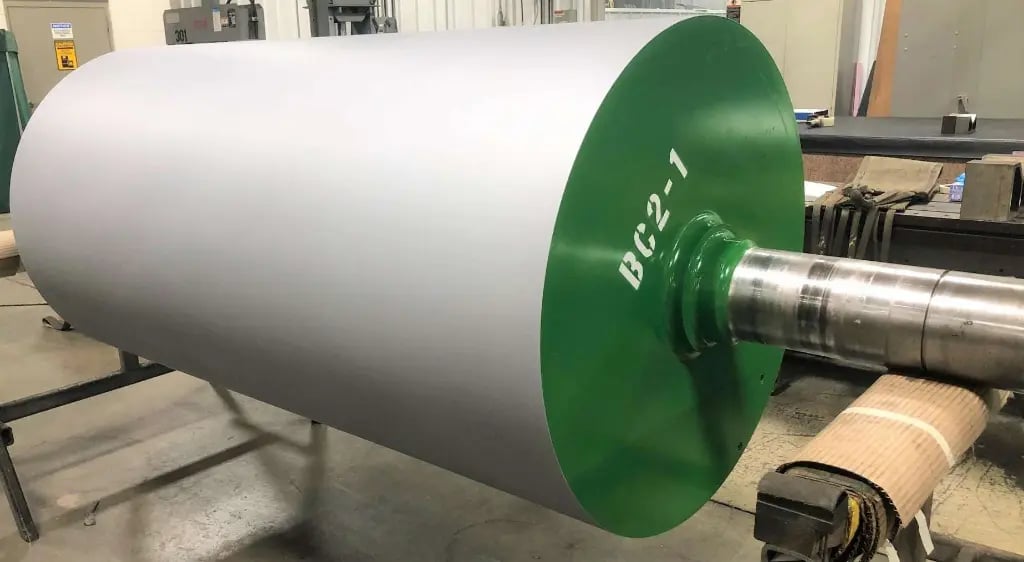
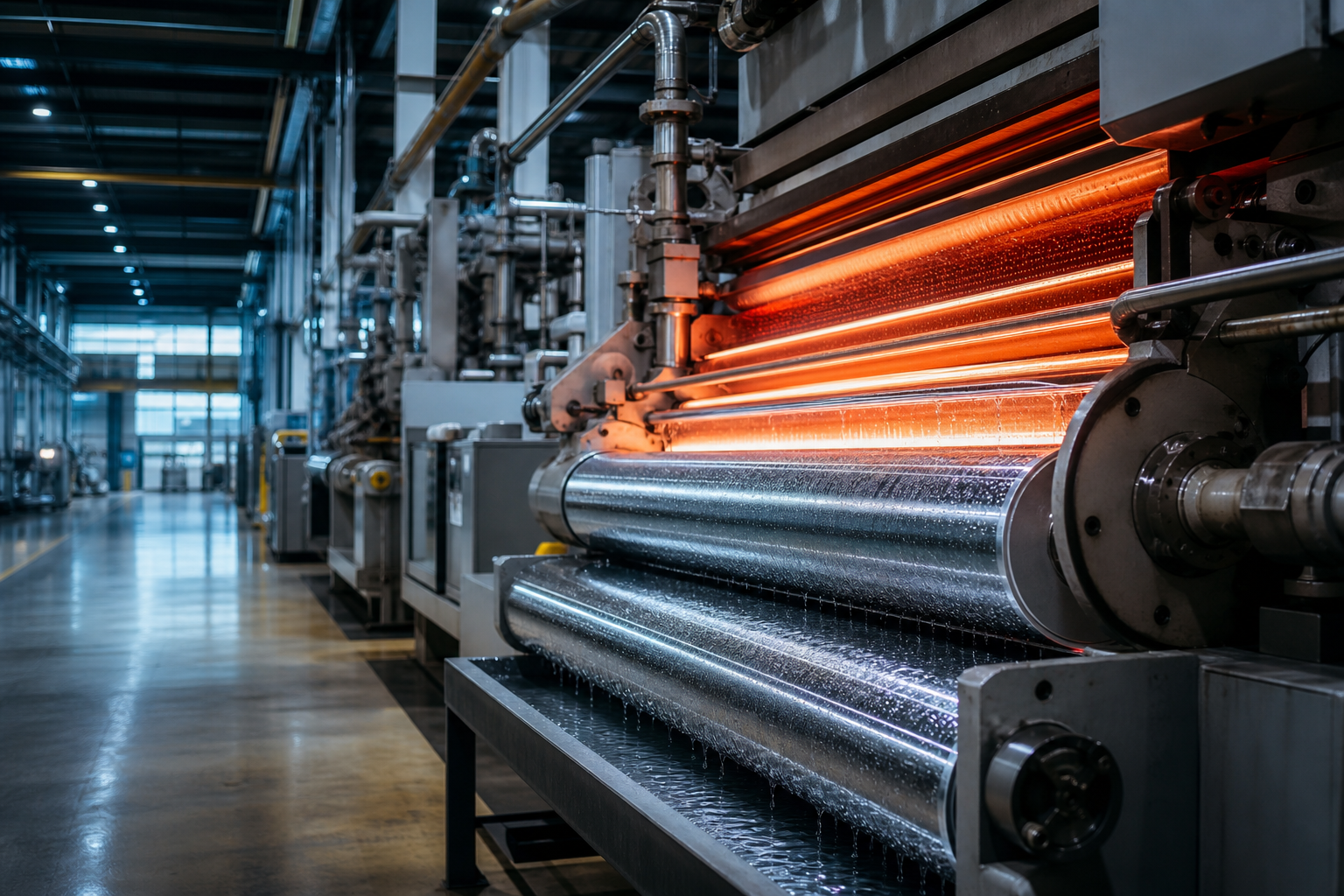
PRS heat transfer rolls deliver precision surface temperature control across high-speed web processing lines, for heating, cooling, or thermal conditioning of films, laminates, paper, and nonwovens. Single wall, double wall, mono-flow, duo-flow, and spiral configurations. Engineered to ±1°F surface temperature tolerance across the full roll face. Serving converters across the globe.
✓ ±1°F Surface tolerance · Single/Double Wall · Mono-Flow/Duo-Flow · Spiral configurations · Serving global converters
±1°F
Surface Tolerance
6 Standard Designs
Internal Configurations
Heat or Chill
Full Temperature Control
Custom Options
Built to Your Spec
How Heat Transfer Rolls & Chill Rolls Work
A heat transfer roll — also called a thermal roll, temperature-controlled roll, or chill roll when used for cooling, is a precision-engineered cylindrical roller designed to transfer thermal energy between its surface and a moving web. Heated or chilled fluid circulates through internal flow channels inside the roll body; as the web passes over the rotating surface, heat moves between the web and the roll surface by direct conduction. The roll's job is to deliver that thermal exchange consistently and uniformly across the full face length and at production line speed.
The defining performance variable for a heat transfer roll is surface temperature uniformity & the degree to which the roll surface holds the same temperature from one edge to the other, and from the inlet end to the outlet end of the fluid path. A roll with poor temperature uniformity will create thermal gradients across the web, which manifest downstream as inconsistent extrusion thickness, uneven coating cure, web curl, dimensional variation, or bond strength differences across the web width. The internal flow geometry, how fluid is routed through the roll, is the primary engineering variable that determines uniformity. Spiral baffle systems, mono-flow versus duo-flow inlet configurations, and single-wall versus double-wall construction each produce measurably different thermal performance.
Internal Flow Path
Wall Construction
Operating Temperature Range
Surface Finish
Flow Rate & Pressure
Dimensional Geometry
PRS HEAT/CHILL TRANSFER ROLL ENGINEERING TEAM
Our engineers have decades of experience designing and constructing heat transfer rolls to exact design parameters, specifications, and application needs. Heat transfer roll design, particularly the internal flow path geometry, is a specialized engineering discipline where small design choices have large downstream effects on web quality. Our depth of knowledge and direct collaboration with customers guides each heat transfer roll solution, whether you're commissioning a new process line or solving thermal uniformity problems on an existing one.
Heat Transfer Rolls (HTR) & Chill roll Applications
PRS heat transfer rolls are used across the full range of web processing markets where surface temperature control directly affects product quality. Each application has specific requirements for operating temperature, flow path design, surface finish, and fluid system compatibility. Our engineering team works with you to match the roll specification to your line and process.
Film Extrusion (Chill Rolls)
Chill rolls positioned downstream of the extrusion die set the film's final structure as it cools from the melt. Surface temperature uniformity across the chill roll directly affects film thickness consistency, optical clarity, and crystalline structure. PRS chill rolls are used in cast film, blown film, and extrusion coating lines across polyolefin, polyester, and specialty resin substrates.
Lamination Lines
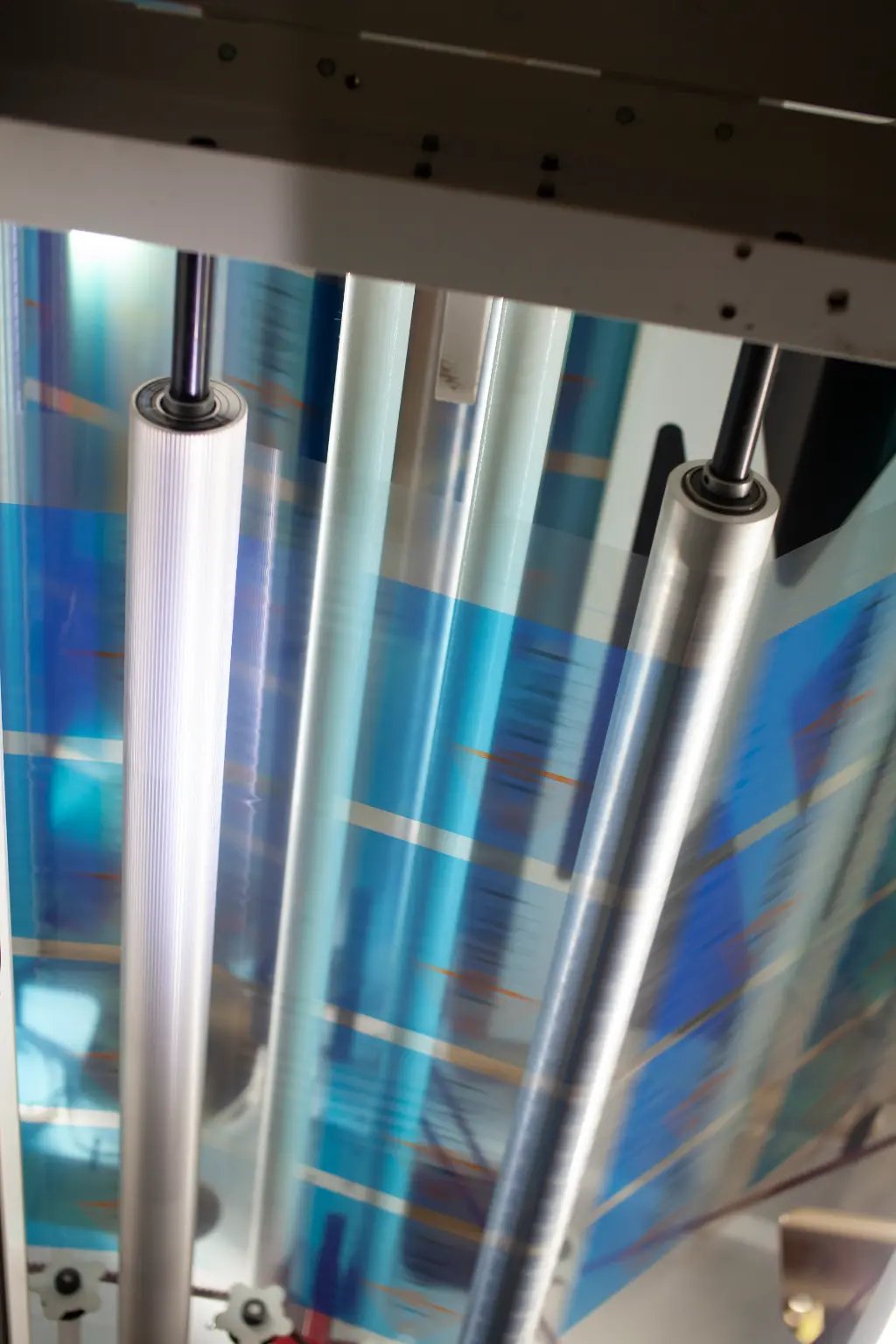
Heat transfer rolls in lamination operations bring substrates to the correct bonding temperature, activate adhesives, and control bond line quality. Roll surface temperature uniformity determines whether adhesion is consistent across the web width and whether laminate appearance is free from thermal artifacts.
Web Coating (Pre-Coat & Post-Coat)
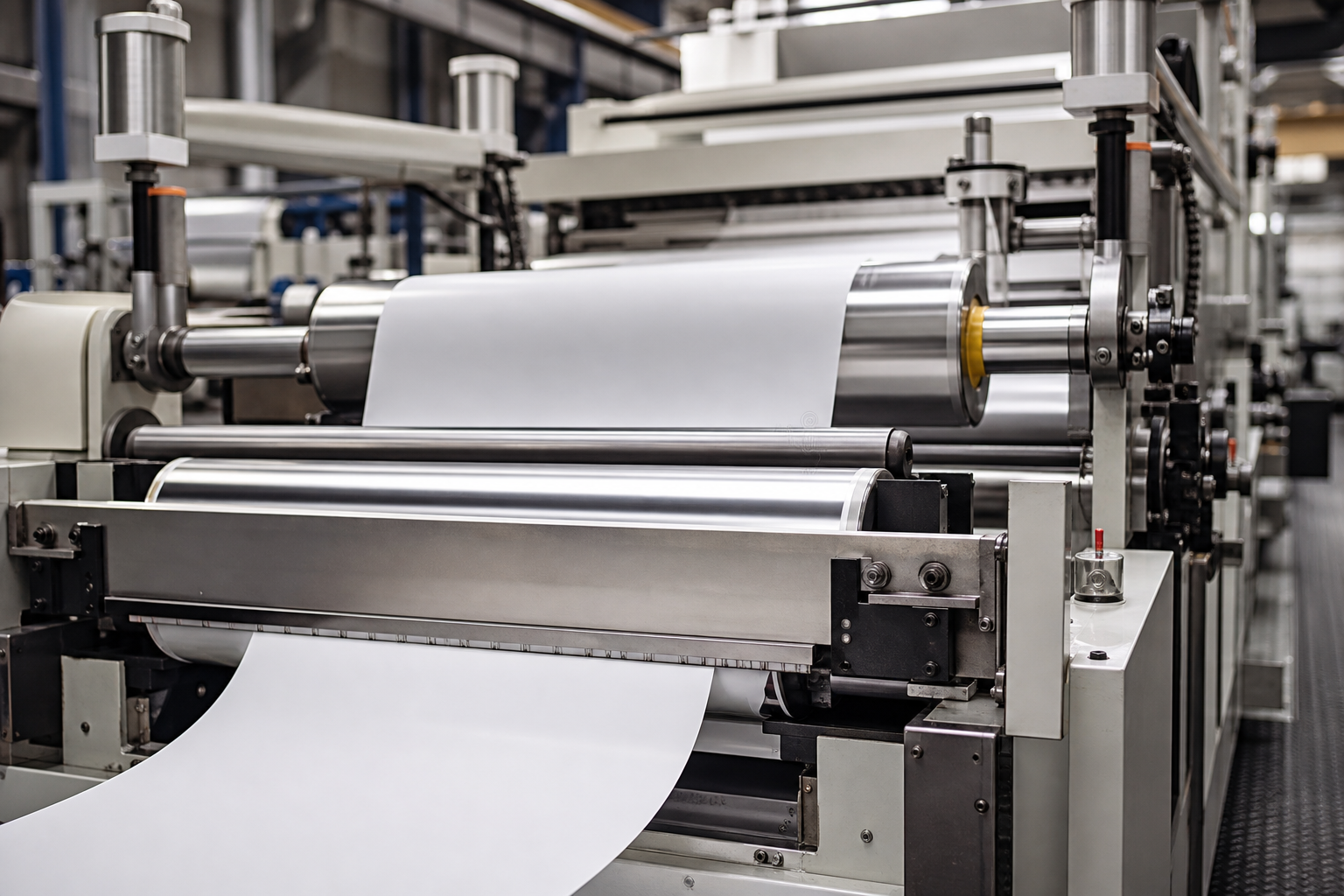
Pre-coating heat transfer rolls condition substrates to the correct temperature before adhesive, primer, or functional coating application. Post-coating rolls accelerate or control coating cure. Both positions require tight surface temperature control to deliver consistent coat weight and cure behavior across the web.
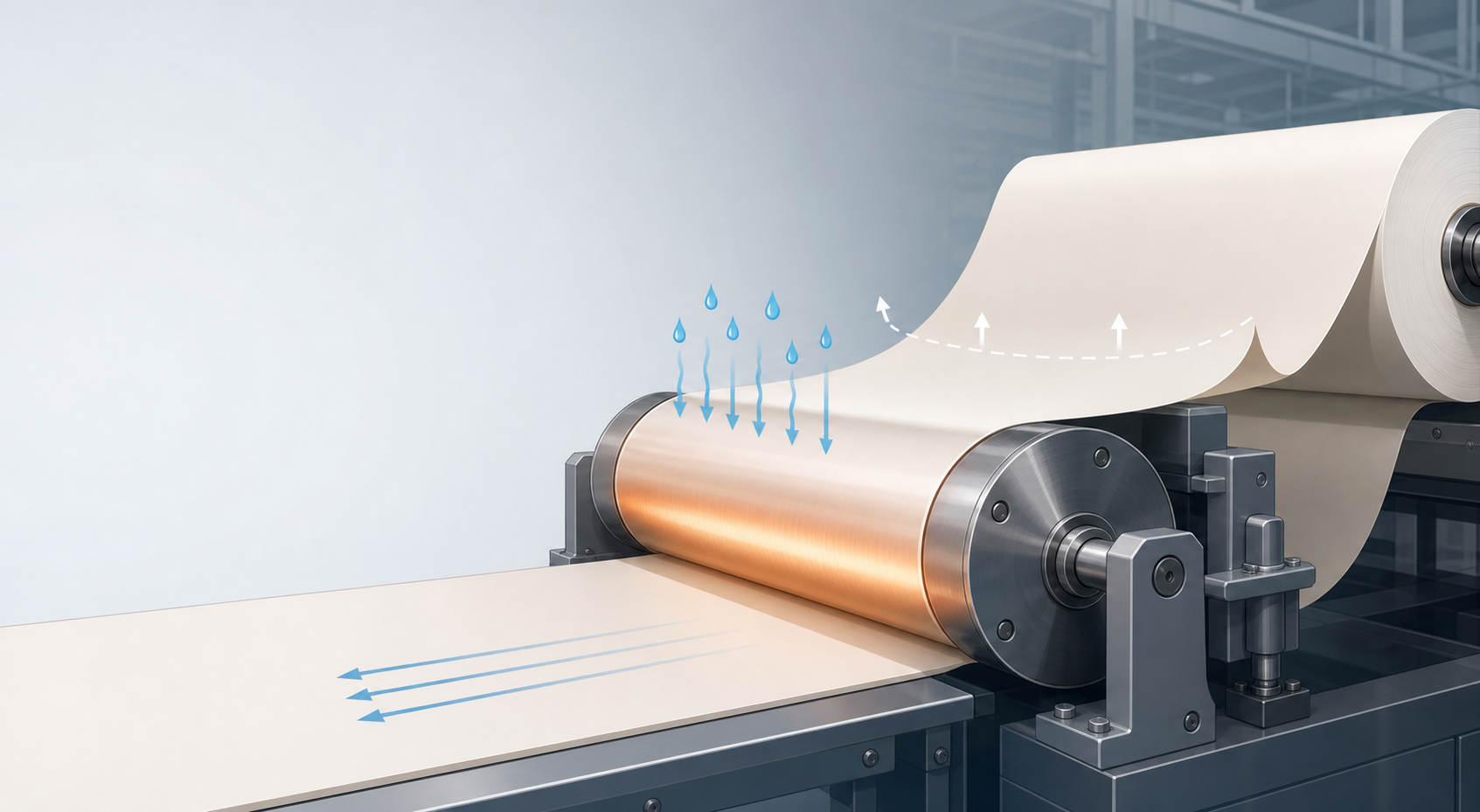
Paper Converting (Curl & Moisture Management)
Heat transfer rolls in paper converting operations manage moisture content and dimensional stability — countering curl developed during printing, coating, or lamination steps upstream. Uniform surface temperature is essential to prevent the converting process from creating new curl while solving for existing curl.
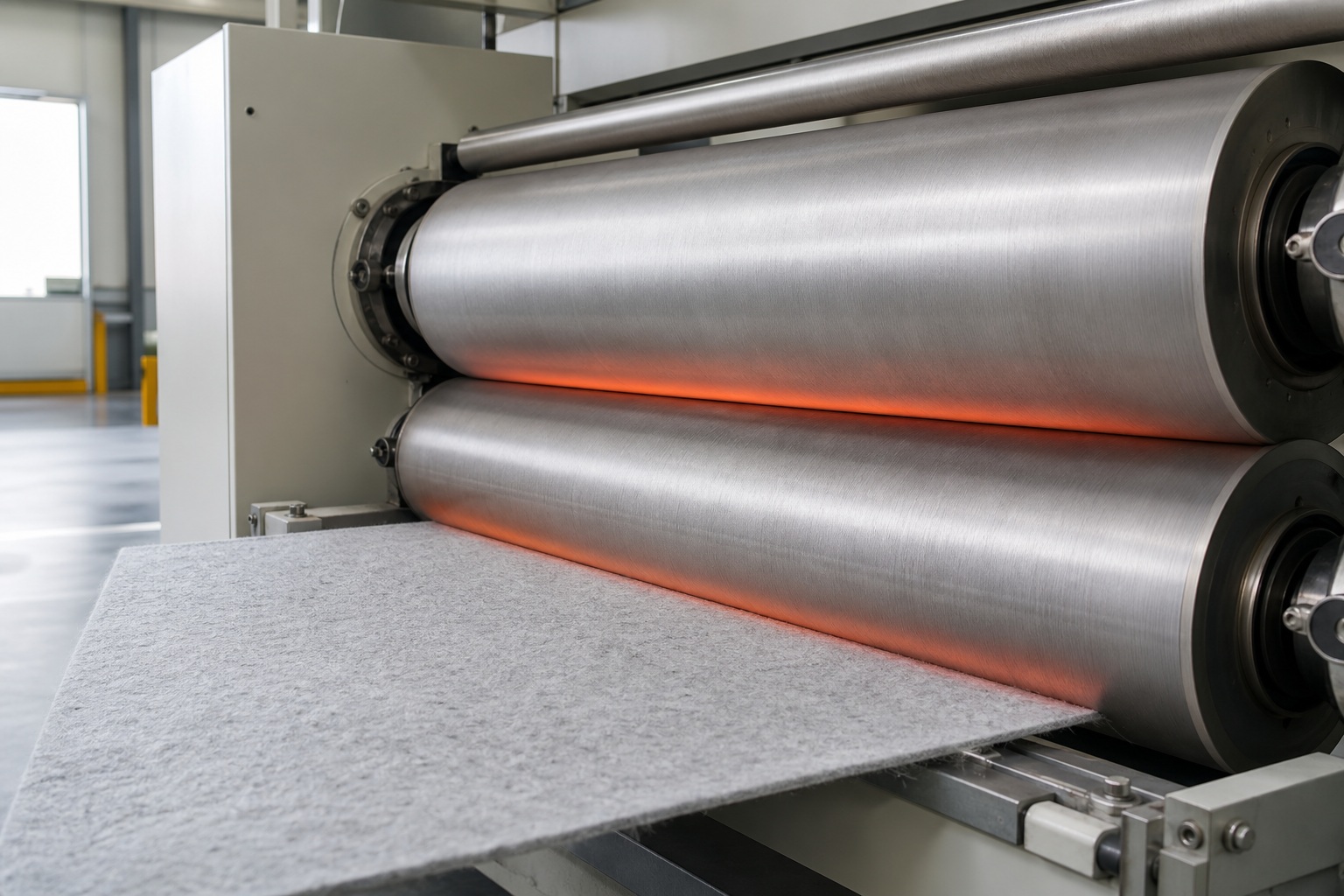
Nonwovens (Thermal Bonding & Calendering)
Thermal bonding nonwovens uses heat transfer rolls to bond fibers at controlled temperatures and pressures. Roll surface temperature uniformity directly determines bond consistency, fabric strength, and product appearance. Calender rolls operating in nonwoven production also typically incorporate heat transfer functionality.
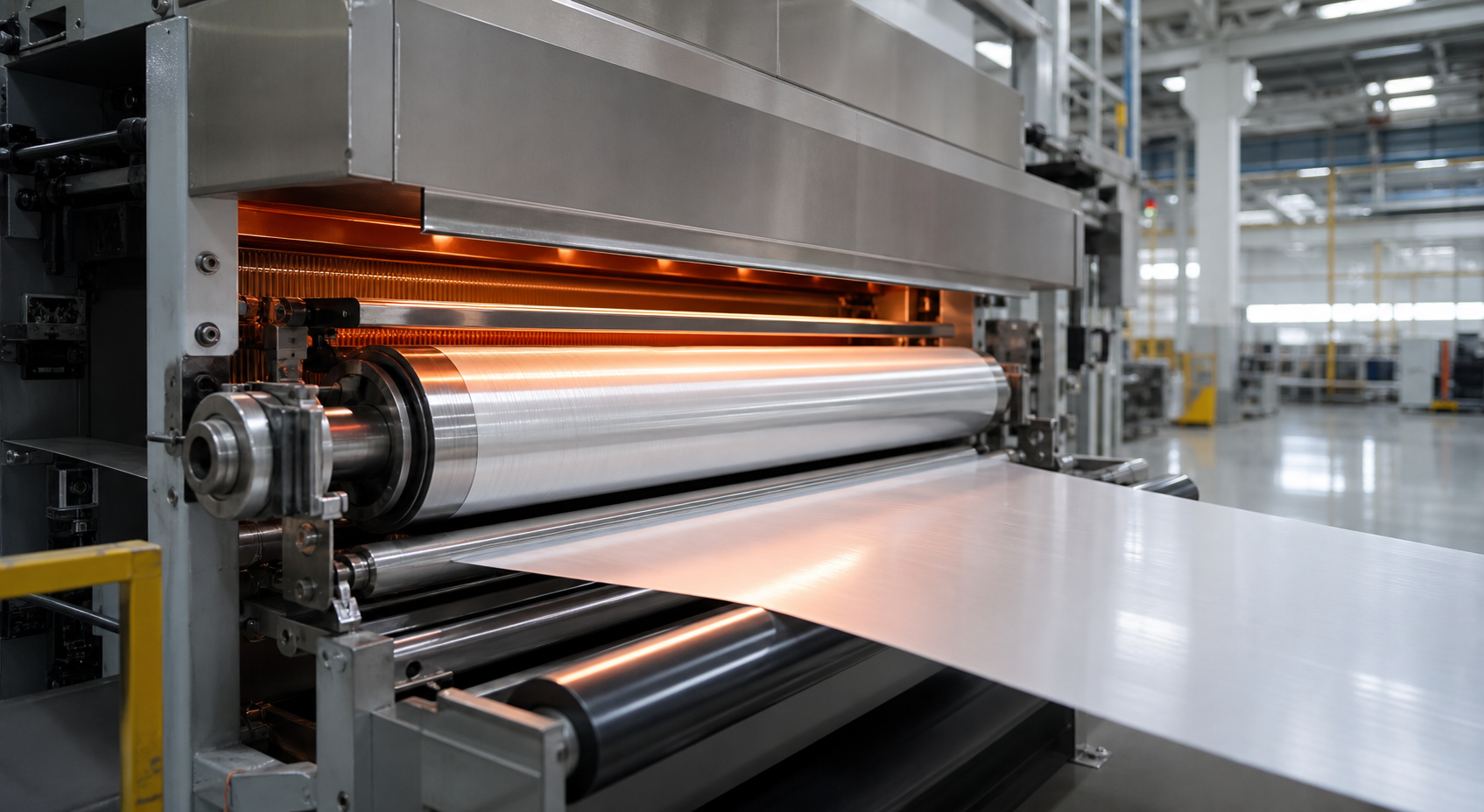
Industrial Coating & Adhesive Lines
Heat transfer rolls in industrial coating operations prepare substrates for adhesive, release, or functional coating layers. Pre-conditioning at the correct temperature is often essential for adhesion or coating wet-out behavior.
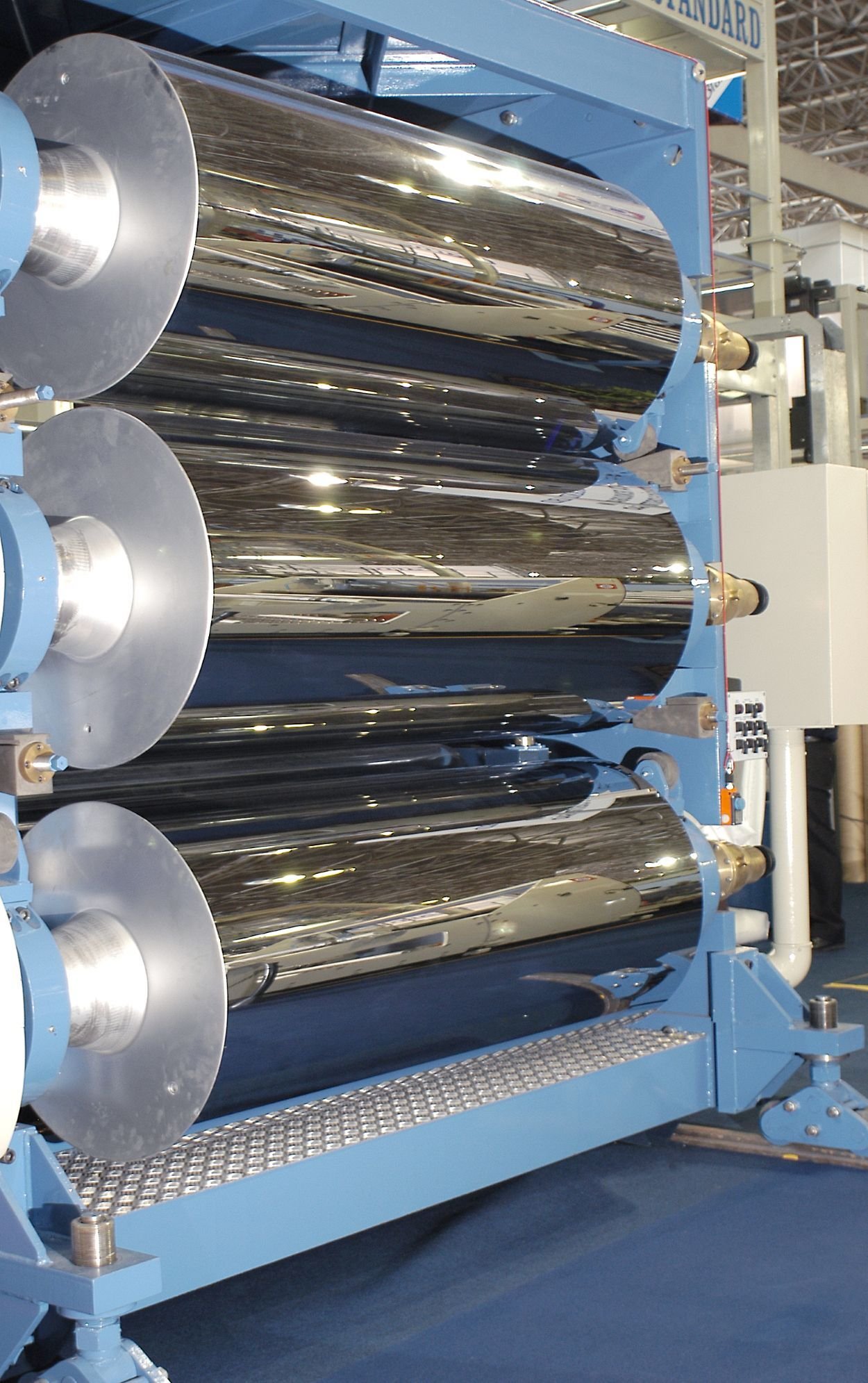
Calender & Embossing Equipment
Heat transfer rolls used as the heated roll in calendering and embossing operations apply controlled temperature to the substrate during compression. PRS supplies heat transfer rolls integrated with PRS's calendering and embossing equipment product lines.
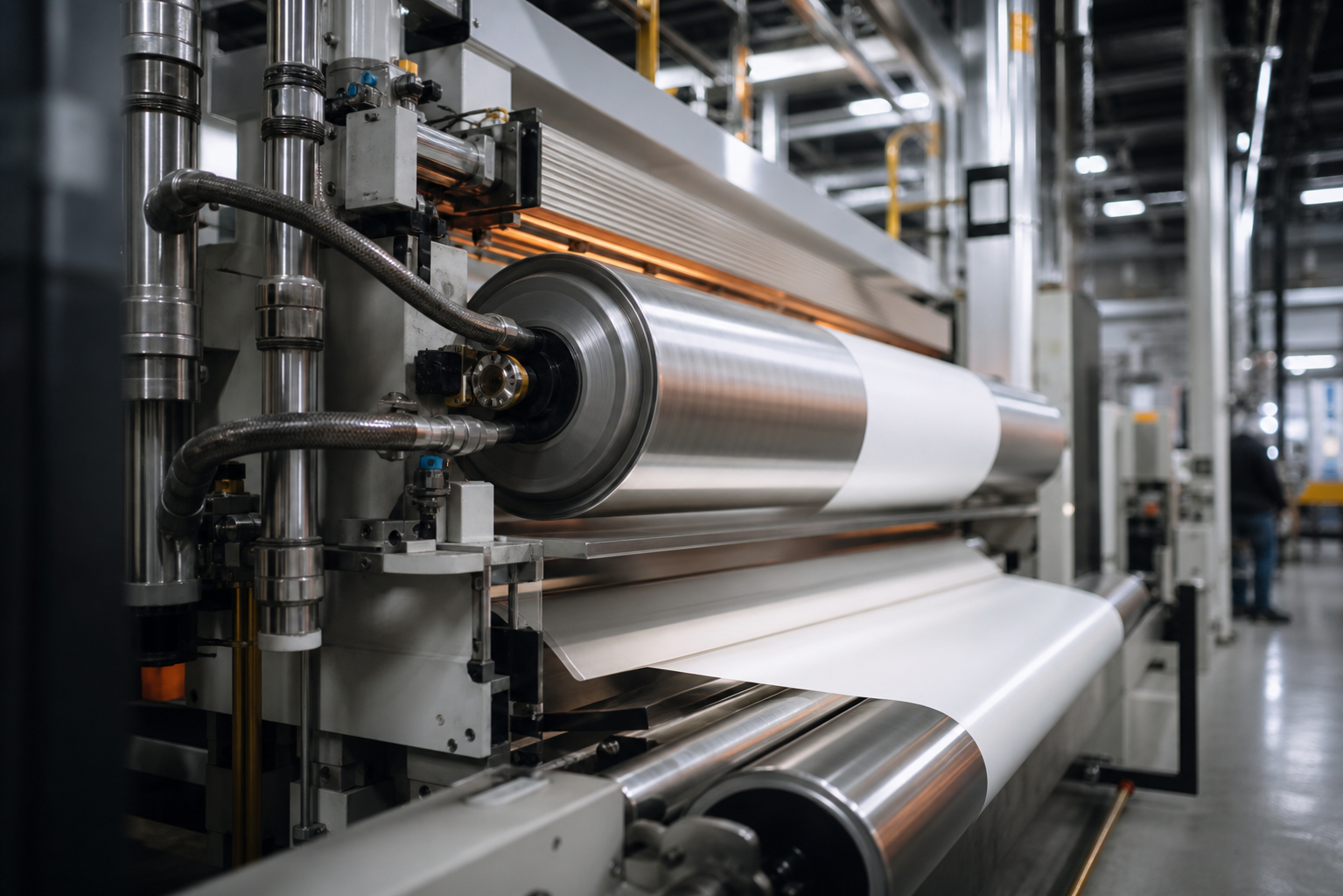
Hot Melt Adhesive Lines
Hot melt adhesive coating and laminating processes require heat transfer rolls capable of operating at elevated temperatures with hot oil thermal fluid systems. Material selection, seal design, and flow path engineering all account for the specific operating conditions.
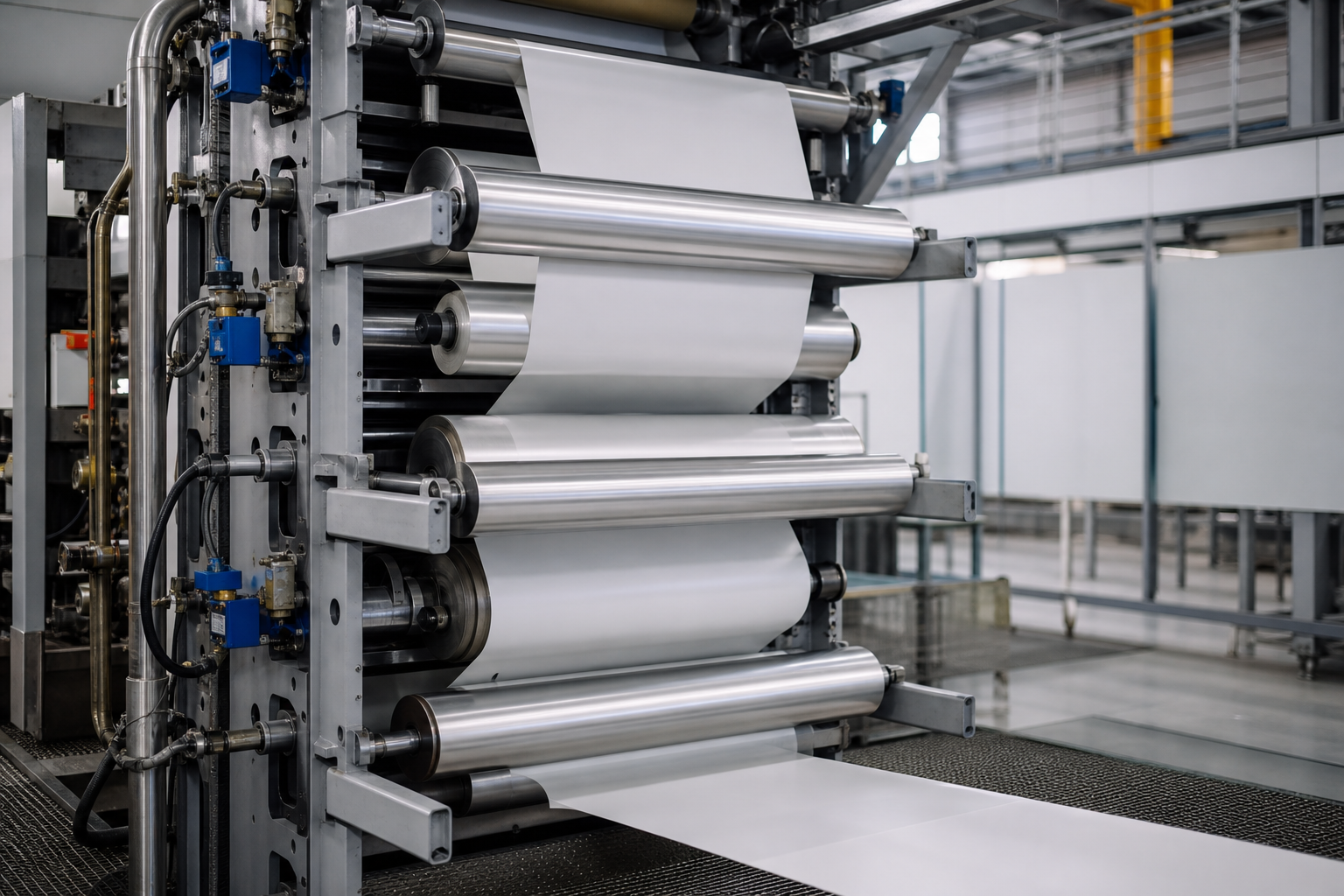
Cooling Towers & Web Conditioning
Multi-roll cooling stacks in coating, laminating, and printing operations use sequential heat transfer rolls to progressively bring web temperature from process conditions to a target downstream temperature without thermal shock.
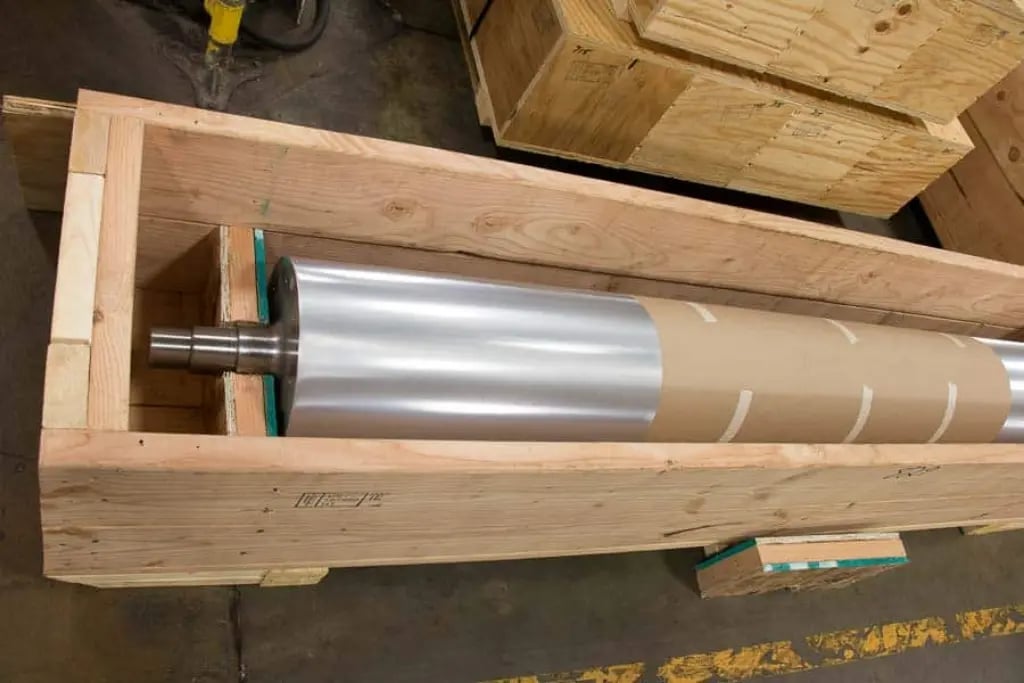
Heat Transfer Roll Configuration Selection Guide
The internal design of a heat transfer roll is the most consequential specification decision, it determines temperature uniformity, thermal response time, and how the roll performs at your specific flow rate and fluid type. Use this guide as a starting point, PRS engineering will validate the configuration for your application.
Heat Transfer Roll Specifications
PRS heat transfer rolls are manufactured to print or engineered custom to the end-user's application. The following represents our standard capabilities, contact us to discuss your line specifications and process requirements.
Heat Transfer Roll Service & Refurbishment
RS provides full service and refurbishment for PRS-built and customer-supplied heat transfer rolls — restoring thermal performance and extending roll service life.
- Full thermal performance evaluation — surface temperature mapping, internal flow inspection, leak test
- Internal flow path cleaning and scale removal for restored thermal efficiency
- Surface refinishing — re-grind, re-chrome, re-polish to mirror or specified finish
- Seal package replacement for restored fluid containment
- Journal repair and precision rebalancing
- Bearing and rotary union service
- Field service for installation, commissioning, and troubleshooting
- Roll identification for unmarked legacy heat transfer rolls
Custom Engineering & Pilot Support
PRS heat transfer rolls integrate with the broader PRS product range — calendering equipment, embossing systems, coating lines, and specialty roll product families.
- Custom heat transfer roll engineering from application requirements
- Integration with PRS calender, embosser, and custom converting equipment
- Application engineering review for new line configurations
- Fluid system specification and sizing support
- Replacement roll engineering for legacy or non-standard machine configurations
- Pilot line testing for novel substrates or thermal processes
- Integration with PRS specialty roll, vacuum, and engraved roll product lines
- Full process line consultation across heating, cooling, and conditioning stages
Ready to specify your heat transfer roll?
Our engineering team works directly with you to design the internal flow path, surface finish, and dimensional geometry that matches your fluid system, substrate, and line speed. Whether you're commissioning a new line or solving a thermal uniformity problem on an existing one, PRS engineering is the partner that handles both. Serving global converters.
Resources for Web Converters & Coaters
Use these resources to support specification development, application evaluation, and supplier selection.
Vacuum Pull Rolls — Deep Dive Technical Review
Detailed engineering review of vacuum pull roll physics, web integrity advantages, and safety benefits versus conventional nip configurations. Written by the PRS vacuum roll engineering team.
PRS Buyer's Guide
An overview of PRS specialty roll capabilities — including heat transfer rolls — to support vendor evaluation and specification development.
Heat Transfer Rolls
PRS heat transfer rolls for temperature-controlled web processing — often used alongside vacuum tension rolls in coating and laminating lines.
Full roll lifecycle services
Full lifecycle services — internal flow path cleaning, surface refinishing, seal replacement, journal repair, and precision rebalancing for heat transfer and specialty rolls.
Frequently Asked Questions
Common questions about heat transfer roll service, refurbishment, repair, performance issues.
A heat transfer roll — also called a thermal roll, temperature-controlled roll, or chill roll when used for cooling — is a precision-engineered cylindrical roller designed to transfer thermal energy between its surface and a moving web. Heated or chilled fluid circulates through internal flow channels inside the roll body. As the web passes over the rotating surface, heat moves between the web and the roll surface by direct conduction. The roll's role is to deliver consistent, uniform thermal exchange across the full face length at production line speed. Surface temperature uniformity is the defining performance variable, and it is determined primarily by the internal flow path geometry — spiral baffles, mono-flow versus duo-flow inlet routing, and single-wall versus double-wall construction each produce measurably different thermal performance.
Functionally, they are the same piece of equipment used for opposite thermal directions. A heat transfer roll is the general term — any roll designed to transfer thermal energy between its surface and a passing web. A chill roll is specifically a heat transfer roll being used to remove heat from the web, most commonly downstream of a film extrusion die where it cools the molten film as it solidifies into final form. The terms are used interchangeably in many converting markets, and the engineering principles are identical: internal flow path geometry, wall construction, surface finish, and fluid system specification all apply to both. PRS supplies heat transfer rolls used as chill rolls, heating rolls, or bidirectional thermal conditioning rolls across all major converting applications.
PRS offers six primary internal configurations. Single wall design provides basic construction for light-duty applications where tight temperature uniformity is not critical. Double wall design uses spiral baffles to enhance thermal contact between the fluid and the roll surface, delivering significantly tighter temperature uniformity. Mono-flow configuration places the fluid inlet and outlet on opposite ends of the roll, providing unidirectional flow that is well-suited to large face lengths. Duo-flow configuration places inlet and outlet on the same end, with the fluid path doubling back internally — preferred for compact machine layouts where plumbing must be consolidated on one side. Spiral (non-contact) flow path eliminates fluid dead zones common in conventional baffle designs and produces the most uniform surface temperature available. Full-contact fit construction uses an inner shell mechanically supporting the outer shell to maximize rigidity and deflection control at high line speeds.
PRS heat transfer rolls are engineered to ±1°F surface temperature tolerance across the full roll face as a standard performance specification. This level of uniformity requires the right combination of internal flow path design matched to the application's fluid type and flow rate, precision machining of internal surfaces to maintain consistent heat transfer coefficients, and dimensional control of the outer shell to deliver true cylindrical geometry across the working face. Tighter tolerances are available for specialized applications such as cast film or optical substrate processing — contact PRS engineering to discuss your specific uniformity requirements.
Surface temperature uniformity directly affects every downstream product quality variable. In film extrusion, non-uniform chill roll temperature creates film thickness variation, optical haze, and inconsistent crystalline structure. In lamination, temperature gradients cause uneven bond strength across the web width, leading to delamination or product appearance issues. In coating, non-uniform substrate temperature causes uneven cure, coat weight variation, and adhesion problems. In paper converting, surface temperature gradients create curl that cannot be removed downstream. In nonwoven thermal bonding, temperature variation causes inconsistent fabric strength and tactile properties. A heat transfer roll's value is entirely determined by its ability to deliver uniform thermal exchange — which is why internal flow path design is the single most consequential engineering decision in heat transfer roll specification.
PRS offers a full range of surface finishes specified to application requirements. Mirror finish (typically achieved through chrome plating and precision polishing) is standard for cast film, optical substrate, and high-gloss laminate applications where any surface texture would transfer to the web. Matte and textured finishes are used where moderate web traction is required without affecting product appearance. Chrome plating is standard for most applications requiring wear and corrosion resistance. Specialty coatings — including ceramic, plasma, and high-release surfaces — are available for specific chemical compatibility, release performance, or extended service life requirements. Surface finish should be specified in coordination with the web substrate, downstream process requirements, and operating fluid system.
Yes. PRS regularly supplies replacement and upgrade heat transfer rolls for OEM converting equipment across the full range of major machine builders, as well as legacy machines where original equipment suppliers may no longer be active. PRS engineering works from customer-supplied specifications, existing roll measurements, or machine drawings to produce replacement rolls that match the dimensional, fluid system, and performance requirements of the original. For unmarked or unidentified existing rolls, PRS's roll identification service can evaluate the existing unit and establish a specification baseline before replacement engineering begins.
Heat transfer rolls frequently serve as the heated roll in calendering and embossing operations — applying controlled temperature to the substrate during the compression nip. PRS supplies heat transfer rolls integrated with PRS's calendering equipment and custom embosser product lines, ensuring that thermal performance, surface finish, and dimensional geometry are matched to the specific machine configuration. For new line builds, PRS engineering can specify the complete thermal roll set as part of the equipment package. For retrofit or upgrade projects on existing machinery, PRS evaluates the current configuration and recommends roll specifications that improve thermal uniformity or extend service life.
Yes. PRS provides service and refurbishment for PRS-built and customer-supplied heat transfer rolls regardless of original manufacturer. Service capabilities include internal flow path inspection and cleaning, scale and deposit removal that restores thermal efficiency, surface refinishing through re-grinding and re-plating, seal package replacement, journal repair, and precision rebalancing. Service begins with a condition assessment to identify what work is needed and a refurb-versus-replace recommendation based on the extent of wear. For legacy or unmarked rolls, the roll identification service establishes a specification baseline before service work begins.
Several operational indicators suggest a heat transfer roll requires service or refurbishment. Declining thermal performance — where the same fluid supply conditions no longer maintain the same surface temperature — typically indicates internal scale or deposit buildup restricting fluid flow or insulating the internal surfaces. Visible web quality issues such as cross-web temperature gradients, uneven cure or bond strength, or new product variation that cannot be explained by upstream process changes can indicate roll uniformity degradation. Fluid leaks at the seal areas, increased noise during rotation, and reduced roll life between rebuilds all indicate that mechanical service is needed. PRS recommends periodic thermal performance evaluation as part of routine plant maintenance — particularly for rolls operating in high-temperature or scale-prone fluid systems.
Heat transfer rolls are used across a wide range of industries where web processing involves temperature control. The primary markets include film extrusion (cast film, blown film, extrusion coating) where chill rolls set final film structure; web coating (water-based, solvent-based, hot melt) where thermal conditioning supports adhesion and cure; lamination (thermal lamination, adhesive lamination) where heat activates bonds; paper converting where heat transfer rolls manage moisture and curl; nonwovens manufacturing where thermal bonding sets fabric structure; calendering and embossing operations where heat transfer rolls apply controlled temperature during the compression nip; specialty industrial coating; and pharmaceutical and medical packaging substrate processing. PRS serves all of these markets with custom-engineered heat transfer rolls built to each application's specific thermal, substrate, and machine requirements.
Connect with PRS Heat Transfer Roll Experts
Questions about heat transfer roll specification, internal flow path design, fluid system compatibility, or service options? The PRS engineering team serves web coaters, converters, extruders, and paper plants across the US and Canada — from first specification through field installation and ongoing refurbishment.