

Specialty Rolls · Web Coating & Converting                           
Vacuum Tension Rolls (VTR) & Vacuum Pull Rolls (VPR)

Precision Roll Solutions designs and manufactures custom vacuum rolls built for reliable web handling, tension control, and converting performance.

CUSTOM VACUUM PULL ROLLS FOR PRECISE WEB CONTROL

PRS vacuum tension rolls — also known as vacuum pull rolls — deliver precision single-sided web tension control for coating lines, converting operations, and roll-to-roll processes where the face side of the web cannot be touched. 12 standard sizes from 175mm (6.89") to 450mm (17.72") plus fully custom builds. Fine-mesh and seamless screens protect delicate substrates. Engineered by one of the industry's most experienced vacuum roll teams.

 ✓ Single-sided web contact · Eliminates nip and S-wrap configurations · Serving US & Canadian converters 

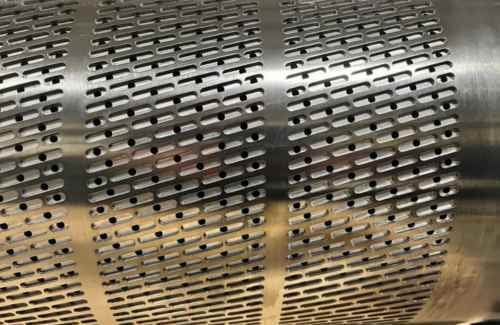
grooved vacuum roll

12 Sizes

175 to 450mm Standard

1-Sided

Web Contact Only

Seamless

Screen Available

MECA

Solutions Built

How Vacuum Tension Rolls Work

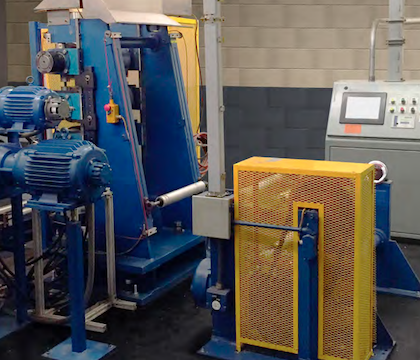
A vacuum tension roll — also called a vacuum pull roll (VPR), vacuum roll, or suction roll — is a hollow cylindrical roller with a perforated outer shell connected internally to a vacuum source. As the web passes over the roll, atmospheric pressure (approximately 101.3 kPa at sea level) presses the web firmly against the rotating roll surface from above, while internal vacuum draws air through the perforated shell from below. The resulting pressure differential creates a high-friction, non-slipping grip between the web and the roll without requiring any contact on the opposite face of the web.

This single-sided contact is the defining advantage of vacuum tension rolls. In conventional pull-roll configurations, a rubber-covered roll is loaded against a driven steel roll to create a nip, and the resulting compressive force isolates web tension between zones. The problem is that a nip touches both sides of the web — which is unacceptable when one face carries a freshly applied coating, an adhesive, a printed image, or any sensitive surface that cannot be marked, scratched, or compressed. S-wrap configurations using two driven rolls work in some cases, but require both face contact and significant floor space. Vacuum tension rolls eliminate both problems: only the back side of the web touches the roll, and a single roll provides full tension isolation.

PRS vacuum tension rolls feature a sealed center tube creating a confined internal vacuum zone, with adjustable side deckles that control the effective vacuum width to match the web. Drive pulleys or journals on the outer shell isolate or adjust tension between zones as needed. The roll surface is available in multiple finishes — electroless nickel, rubber covering, plasma coating, fine-mesh screen, or mechanical micro-groove engraving — selected based on the web type, coating chemistry, and traction requirements. For the most delicate webs, seamless nickel screens eliminate any seam-induced defects and deliver consistent grip across the full web width.

PRS VACUUM ROLL ENGINEERING TEAM

PRS vacuum tension rolls are engineered by a vacuum roll team with decades of combined experience designing and producing vacuum rollers installed at converting operations across North America and internationally. Vacuum roll design — particularly the internal vacuum geometry, deckle sealing, and screen specification — is a specialized engineering discipline, and the difference between a roll that performs reliably for years and one that creates wrinkles, dust, or web marking is almost always determined by the design choices made before manufacturing begins.

Vacuum Tension Roll Applications

PRS vacuum pull rolls are used across the full range of web converting, coating, and roll-to-roll manufacturing processes where single-sided web contact and precise tension isolation are required. Each application has specific requirements for screen type, surface treatment, and vacuum geometry — our engineering team works with you to match the design to your substrate, line speed, and process conditions.

PRS Real-World Posts-8-Packaging

Web Coating Lines (Water, Solvent, Hot Melt)

Downstream of coating heads where the wet or freshly cured coated face cannot be touched. Vacuum tension rolls provide tension isolation between the coating station and downstream drying or curing zones without disturbing the applied coating. Seamless screens are typically specified for sensitive coating chemistries. 
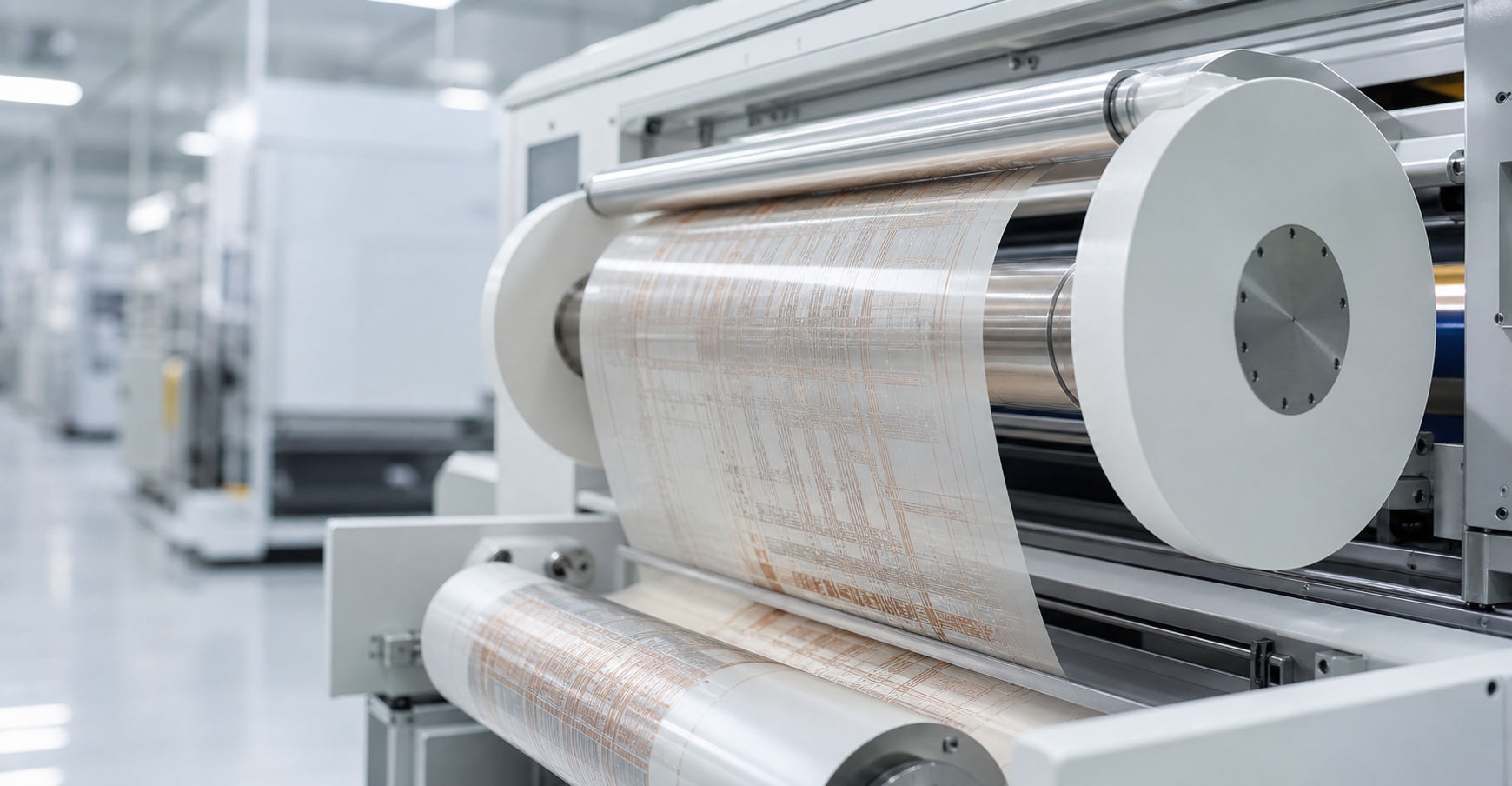
Vacuum Tension Roll Handling for Printed Electronics

Printed Electronics & Flexible Devices

Printed sensors, OLED substrates, flexible photovoltaics, and other printed electronic devices require contamination-free, marking-free handling. Vacuum tension rolls deliver the tension control these processes need without compromising the printed layer.

Blue Medicine Pills [Sq]

Medical & Pharmaceutical Substrates

Medical-grade films, wound care substrates, transdermal patch carriers, and pharmaceutical packaging materials run through coating and converting operations where surface contact is regulated. Vacuum tension rolls enable single-sided handling that meets these production constraints.
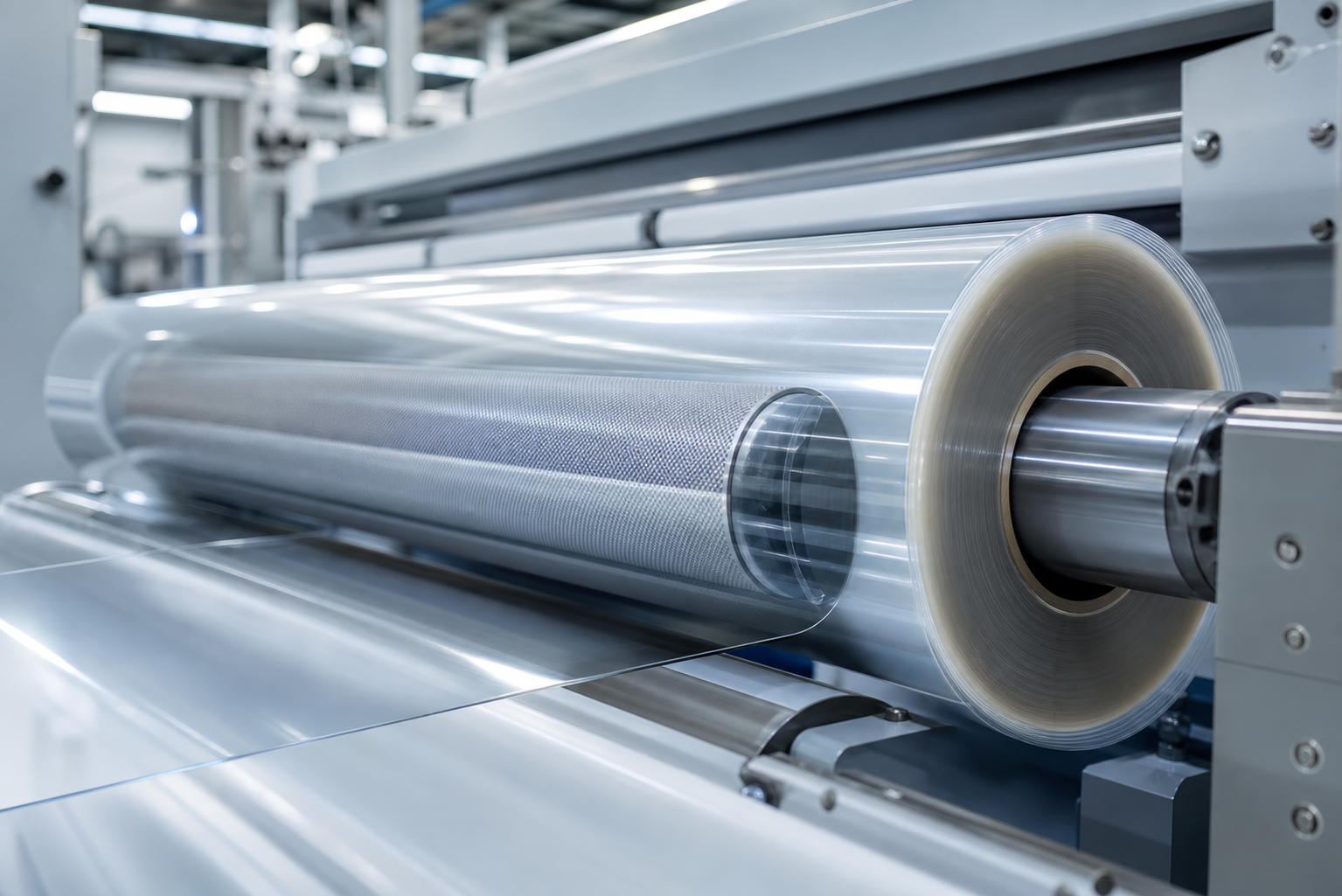
Optical Films with AntiReflective Coating

Optical Films & Display Substrates

Display films, optical brightener layers, and anti-reflective coatings are extraordinarily sensitive to surface marking. Fine-mesh and seamless screen vacuum rolls preserve optical clarity and surface integrity during converting.
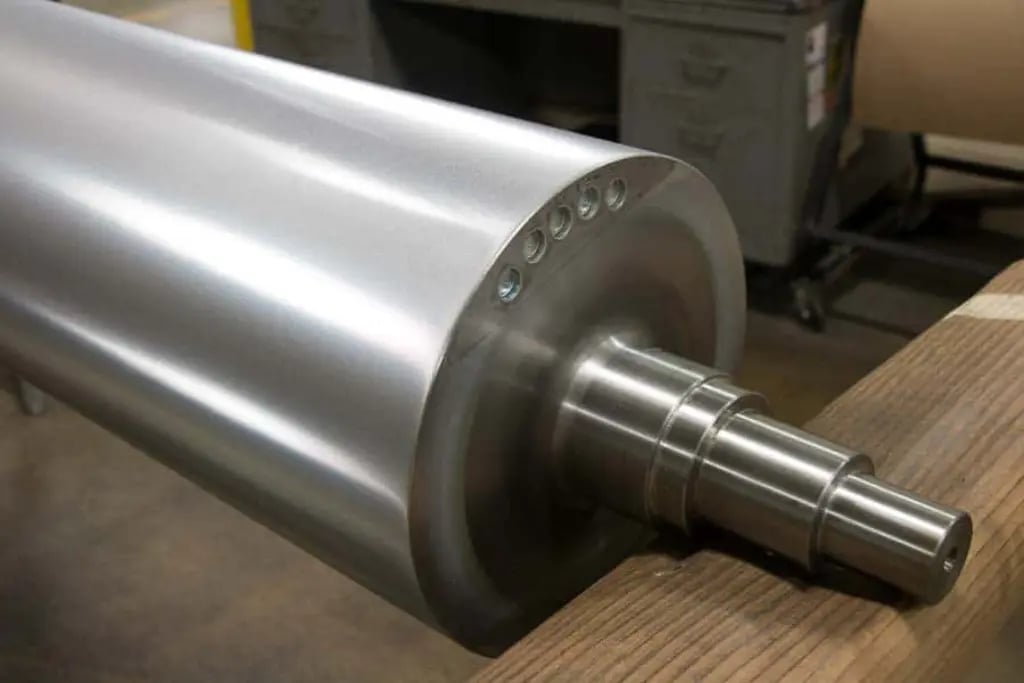
Gravure Print Cylinders - MECA

Advanced Materials & Composites

Advanced film substrates, composite prepregs, and specialty laminates often require non-contact handling on the resin or coated side. Vacuum tension rolls provide the tension control these high-value materials demand.
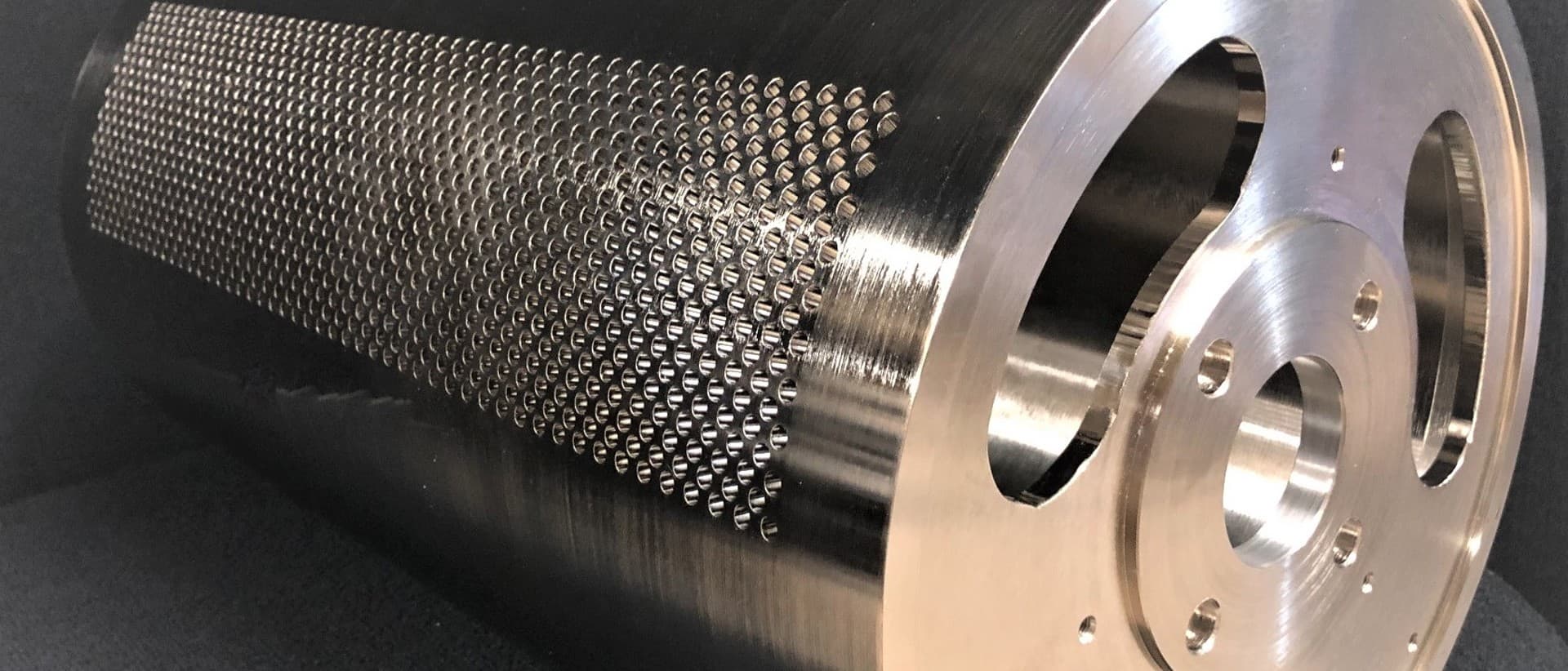
VaccumRoll

Ultra-Thin & Ultra-Light Webs

Substrates below 25 microns or with very low tension tolerance are handled cleanly with vacuum tension rolls. The atmospheric grip mechanism provides traction without the compressive force that conventional nips would impose.
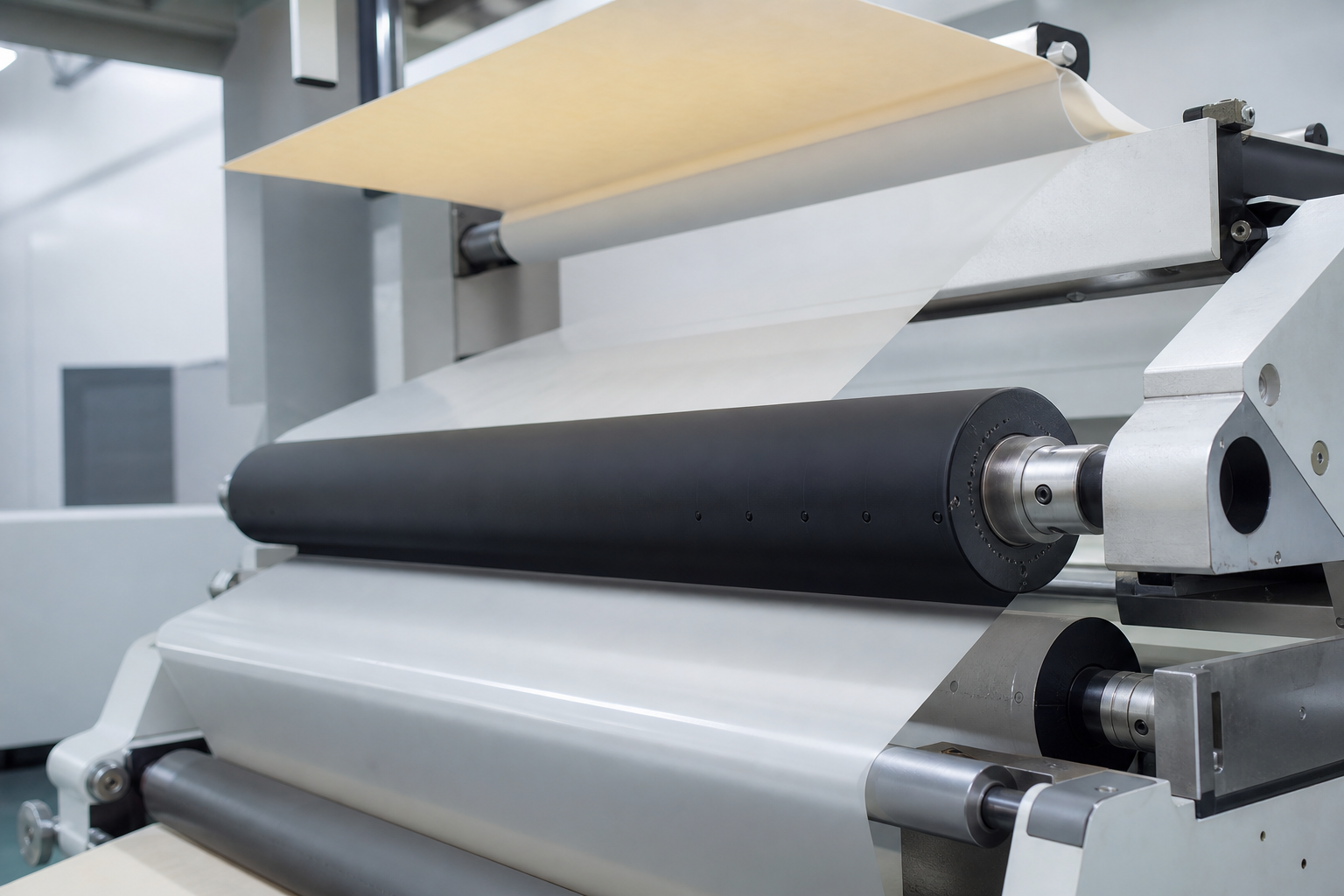
Vacuum Tension Roll Handling Adhesive Films

Adhesive & Pressure-Sensitive Films

PSA labels, adhesive-coated films, and release liner production all require single-sided contact handling. Vacuum tension rolls handle these webs without marking the adhesive face or contaminating the silicone release layer.
PRS Real-World Posts-6-Printing

Pre-Oven & Pre-Dryer Tension Isolation

Used immediately upstream of flotation ovens, drying tunnels, and curing zones to establish a clean tension boundary between web zones. The single-sided contact prevents marking before the coating has fully set.
Gravure Print Cylinders - MECA

Specialty Decorative & Industrial Films

Decorative films, optical films, and specialty industrial substrates where one face is the show face. Vacuum tension rolls enable handling without face-side contact through coating, laminating, and slitting operations.
Vacuum Tension Roll Configuration Selection Guide

Selecting the right screen type and surface treatment depends on web type, coating sensitivity, line speed, and traction requirements. Use this guide as a starting point — PRS engineering will validate the optimal configuration for your specific application.

Application / Web Type
Recommended Configuration
Why
Delicate coated webs (optical, PSA, freshly coated)
Seamless Nickel Screen + Electroless Nickel Surface
Eliminates seam-induced marking; nickel finish is smooth, non-marking, and corrosion-resistant for water-based and solvent coating environments
High-traction requirements with moderate web sensitivity
Fine-Mesh Screen + Plasma Coating
Plasma coating enhances grip without compressive contact; fine mesh balances traction against marking risk for medium-sensitivity substrates
Heavy or robust films (thicker substrates, industrial)
Perforated Steel + Rubber Covering
Rubber covering delivers maximum traction; perforated steel screen is cost-effective for substrates that tolerate larger hole patterns
Ultra-thin webs (under 25 microns)
Fine-Mesh or Seamless Screen + Mechanical Micro-Groove
Micro-groove engraving distributes grip evenly across the web width; fine mesh prevents dimpling characteristic of large-hole perforations
Variable web width operations
Pneumatic Width Adjustment + Seamless Screen
Pneumatic deckles enable rapid changeover between web widths; tighter seal clearance maintains vacuum efficiency across the range
Dust-sensitive or clean-room environments
Larger Open Area + Easy-Clean Screen
Larger perforations or coarser screen allow environmental contaminants to pass through cleanly; screen selected for cleanability
High-speed coating lines (boundary layer concerns)
Custom Vacuum Geometry + Plasma or Nickel Surface
Removes air boundary layer at speed; surface treatment selected to maintain grip without slip as line speed increases
Pharmaceutical / medical substrates
Stainless Steel + Seamless Nickel Screen
Stainless construction meets GMP-compatible cleanliness requirements; seamless screen eliminates any seam-related contamination risk


Vacuum Tension Roll Specifications

PRS vacuum tension rolls are available in 12 standard diameters plus fully custom builds. The following represents our manufacturing envelope — contact us to discuss your line specifications and substrate requirements.

Spec
Details
Standard Diameter Range
12 standard sizes from 175mm (6.890") to 450mm (17.717")
Custom Sizes
Available — face length, diameter, and journal configuration fully custom to line requirements
Screen Options
Perforated steel shell, fine-mesh screen, seamless nickel screen
Surface Treatments
Electroless nickel plating, rubber covering, plasma coating, fine-mesh screen, mechanical micro-groove engraving
Width Adjustment
Mechanical (infinitely adjustable with visual indicator) or pneumatic (automation-friendly, tighter seal clearance)
Internal Design
Sealed center tube creating confined vacuum zone; deckle system controls effective vacuum width
Vacuum Source
External vacuum pump or facility vacuum tie-in; specification depends on web width, wrap angle, and required grip force
Balancing
Dynamic balance inspection and balancing standard
Web Compatibility
Films, foils, coated webs, nonwovens, paper, optical substrates, printed electronics, medical/pharma films
Geographic Coverage
United States and Canada; international shipping available

Vacuum Roll Service & Refurbishment

Restore performance, extend roll life, and improve production consistency with vacuum roll service and refurbishment from PRS. Whether your roll needs cleaning, repair, reconditioning, or performance validation, our team helps identify wear, restore proper functionality, and ensure your vacuum rolls are ready for real production environments.

Have a coating or converting line that can't touch the face side of the web? 

Our vacuum roll engineering team works directly with you to specify the right screen, surface treatment, vacuum geometry, and deckle configuration for your substrate and line conditions. Standard sizes ship faster — custom designs are our specialty. Serving US and Canadian converters. 

Resources for Web Converters & Coaters

Use these resources to support specification development, application evaluation, and supplier selection.

Vacuum Pull Rolls — Deep Dive Technical Review

Detailed engineering review of vacuum pull roll physics, web integrity advantages, and safety benefits versus conventional nip configurations. Written by the PRS vacuum roll engineering team. 

Blog

PRS Buyer's Guide 

An overview of PRS specialty roll capabilities — including vacuum tension rolls — to support vendor evaluation and specification development. 

Buyer's Guide

Heat Transfer Rolls

PRS heat transfer rolls for temperature-controlled web processing — often used alongside vacuum tension rolls in coating and laminating lines.

Product

Full roll lifecycle services  

Full lifecycle services — screen replacement, surface treatment renewal, seal rebuild, journal repair, and precision rebalancing for vacuum and specialty rolls. 

Service

Frequently Asked Questions

Common questions about vacuum roll service, refurbishment, repair, performance issues, and PRS/IR capabilities.


What is a vacuum tension roll and how does it work?

 A vacuum tension roll — also called a vacuum pull roll (VPR), vacuum roll, or suction roll — is a hollow rotating cylinder with a perforated outer shell connected internally to a vacuum source. As the web passes over the roll, atmospheric pressure (approximately 101.3 kPa at sea level) presses the web firmly against the rotating roll surface from above while internal vacuum draws air through the perforated shell from below. The resulting pressure differential creates a high-friction grip between the web and roll without requiring any contact on the opposite face of the web. This single-sided contact is what makes vacuum tension rolls the right choice for coating, converting, and roll-to-roll lines where the face side carries a wet coating, adhesive, printed image, or other surface that cannot be marked or compressed by a conventional pull roll. 

What is the difference between a vacuum tension roll, a vacuum pull roll, and a vacuum roll?

 All three terms refer to the same fundamental piece of equipment — a perforated rotating cylinder that uses internal vacuum and external atmospheric pressure to grip a web with single-sided contact. The terminology varies by region, industry, and manufacturer. "Vacuum tension roll" (VTR) emphasizes the tension isolation function, common in coating and converting markets. "Vacuum pull roll" (VPR) emphasizes the web pulling function, common in tension control engineering literature. "Vacuum roll" or "suction roll" are the more general terms used in some web handling contexts. Functionally the roll is the same — what matters in specification is the screen type, surface treatment, vacuum geometry, and width adjustment method, not the terminology used to describe it. 

When should I use a vacuum tension roll instead of a conventional pull roll or S-wrap?

 Use a vacuum tension roll whenever the face side of the web cannot be touched — which is the most common reason converters specify vacuum rolls. A conventional pull roll configuration uses a rubber-covered roll loaded against a driven steel roll to create a nip, which compresses the web between two surfaces. This works well for many substrates but is unacceptable when one face carries a wet or recently cured coating, a pressure-sensitive adhesive, a printed image, an optical layer, or any surface that would be damaged by compressive contact. S-wrap configurations using two driven rolls partially solve the issue but still require contact on both web faces. Vacuum tension rolls solve the problem completely by gripping the web through atmospheric pressure differential — only the back side of the web touches the roll surface. Vacuum rolls are also preferred when tension isolation needs to remain in place during web stoppages, which is more difficult with conventional nip configurations. 

What screen options are available, and how do I choose between them?

 PRS offers three primary screen types: perforated steel shell, fine-mesh screen, and seamless nickel screen. Perforated steel is the most cost-effective option and is appropriate for thicker, more robust webs that can tolerate the larger hole pattern; it also allows easier passage of environmental dust and is easier to clean. Fine-mesh screens use smaller, more numerous openings to reduce the risk of dimpling or marking on thinner webs while still allowing effective vacuum transmission. Seamless nickel screens are the premium option — they eliminate any seam-related marking risk and provide consistent grip across the full web width, which is essential for optical films, pressure-sensitive products, freshly coated webs, and pharmaceutical-grade substrates. The right screen depends on the substrate's surface sensitivity and the production environment. 

What surface treatments are available for PRS vacuum tension rolls?
PRS offers five primary surface treatments: electroless nickel plating provides a smooth, corrosion-resistant finish well-suited to water-based and solvent coating environments; rubber covering delivers the highest traction for substrates that require maximum grip without slip; plasma coating combines enhanced grip with high-release performance and is preferred for sticky or tacky webs; fine-mesh screen provides non-marking surface contact ideal for thin or sensitive materials; and mechanical micro-groove engraving distributes grip evenly across the web width using a precise pattern of small grooves. The right surface treatment depends on web type, coating chemistry, line speed, and traction requirements.


What sizes does PRS offer for vacuum tension rolls?

PRS offers 12 standard vacuum tension roll diameters ranging from 175mm (6.890 inches) to 450mm (17.717 inches). Standard sizes are available with shorter lead times than custom builds and cover the majority of typical converting and coating line requirements. Custom-engineered sizes — including non-standard diameters, custom face lengths, and special journal configurations — are also available for line configurations that require specific dimensional matching. Contact PRS with your line specifications and substrate requirements to confirm whether a standard size will work or whether a custom design is needed. 

What is the difference between mechanical and pneumatic width adjustment?

  Mechanical width adjustment uses a hand-operated mechanism with a visual indicator showing the exact deckle setting — it is infinitely adjustable across the roll's working range and is preferred for production lines where width changes are infrequent and operator visibility is important. Pneumatic width adjustment uses air-actuated deckles that can be repositioned via line controls, making it well-suited for automated changeover between different web widths. Pneumatic deckles also typically maintain tighter seal clearances, which improves vacuum efficiency by reducing air leakage around the deckle seal. The choice depends on changeover frequency, automation integration, and the operational priorities of the line. 

How are vacuum tension rolls used in coating lines?

 In coating operations, vacuum tension rolls are most commonly positioned immediately downstream of the coating head — between the application point and the drying or curing zone. At this position the freshly applied coating cannot be touched on its face side, but tension isolation between the coating zone and the dryer zone is essential to prevent coating disturbance. The vacuum roll grips the back side of the web and provides the tension boundary that the line requires, while the coated face passes through without any compressive contact. Vacuum tension rolls are also used immediately upstream of flotation ovens, where they establish a clean tension reference into the oven section, and downstream of dryers and curing zones for similar tension isolation purposes. 

What can cause web marking, wrinkles, or dust with a vacuum tension roll?

 Several factors can degrade vacuum roll performance. Web marking is typically caused by perforation holes that are too large for the substrate thickness — solved by specifying a finer mesh or seamless screen for sensitive webs. Wrinkles can result from roll misalignment, diameter variation across the face length, or excessive traction at the wrong wrap angle — addressed through precision balancing, geometry control during manufacturing, and correct vacuum zone specification. Dust generation can occur when vacuum air picks up particulates from the web surface and pulls them through the perforations; this is mitigated through correct deckle adjustment to match the effective vacuum area to the actual web width, reducing the vacuum impact on areas outside the web edges. PRS vacuum roll engineering specifically accounts for these factors during design. 

Can PRS service or refurbish vacuum tension rolls from other manufacturers?

 Yes. PRS provides inspection, screen replacement, surface treatment renewal, internal seal and deckle rebuild, journal repair, and precision rebalancing services for both PRS-built vacuum tension rolls and rolls originally manufactured by other suppliers (including Webex, MEGA-DRIVE, New Era, and others). Service begins with a full condition assessment to identify what work is needed, followed by a refurb vs. replace recommendation. For legacy or unmarked rolls, PRS's roll identification service can establish a specification baseline from the existing unit. Contact PRS with the make, model, and condition of your existing rolls to discuss service options. 

Does PRS provide field service and installation support for vacuum tension rolls?

 Yes. Field service is available for installation support, commissioning of new rolls, and operational troubleshooting of existing units. Common field service scenarios include initial installation and vacuum source commissioning, investigation of wrinkles or web marking issues, deckle adjustment for new substrate runs, and screen condition evaluation. Field service support is provided across the US and Canada by appointment. 

What industries use vacuum tension rolls and vacuum pull rolls?

 Vacuum tension rolls are used across a wide range of industries where web coating, converting, and roll-to-roll processing require single-sided web contact. The primary markets include web coating operations across water-based, solvent-based, and hot-melt coating processes; pressure-sensitive adhesive (PSA) labels and films; optical film and display substrate manufacturing; printed electronics including OLED, photovoltaic, and sensor substrates; medical and pharmaceutical packaging materials; aerospace film and composite prepreg processing; decorative film and specialty substrate converting; and any roll-to-roll line where the face side of the web carries a coating, adhesive, image, or surface that cannot be marked. 

Does PRS serve Canadian web converters and coaters in addition to the US?
Yes. PRS and MECA Solutions serve web converting, coating, and roll-to-roll manufacturing customers across the United States and Canada. We supply new vacuum tension rolls, custom-engineered designs, full service and refurbishment, and field installation support to converting and coating operations across all major North American markets. Our engineering team handles cross-border specification, logistics, and customer service coordination as part of our standard process.
Back to top

Connect with PRS Vacuum Roll Experts

Questions about vacuum tension roll specification, screen selection, surface treatment, or service options? The PRS vacuum roll engineering team serves web coaters and converters across the US and Canada — from first specification through field installation and ongoing refurbishment.


Request A Consultation